AURORA DESIGN STUDIOSNARRATIVE ARCHITECTURE · BOOKS · SCRIPTS · WORLDS Contact

IMAGINE.
ARCHITECT.
ENDURE.

PLANETARY SYSTEM

The World

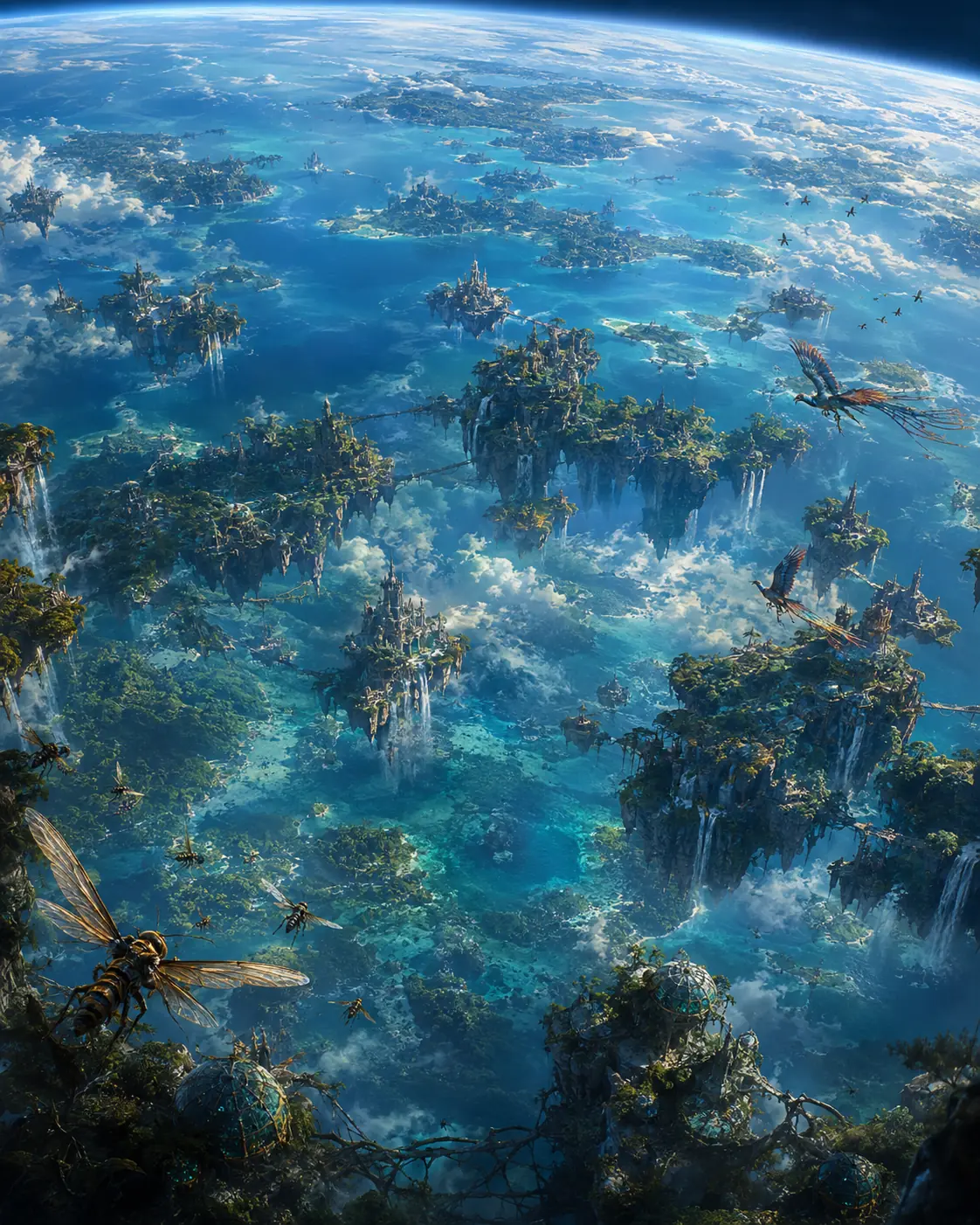
A large, warm, low-gravity world engineered from physical constraints rather than convenience. Gravity, atmospheric density, oxygen partial pressure, climate and fire ecology must work together.

PRELIMINARY · content and parameters remain subject to canon/science review.

Planetary architecture

Five systems. One living world.

Start with the physical rules, then follow their consequences through the atmosphere, climate, geology, and living regions.

Working concept: lower gravity and atmospheric oxygen near 40%. Total pressure, oxygen partial pressure, wildfire controls, and their effects on body scale remain under science and canon review.
World logic

The planet is the first engineering constraint.

SkyHive keeps its low-gravity, dense-air, tropical-superbiosphere direction while its exact planetary model remains under science review. Every civilization, body plan, and technology must grow from the same environmental rules.

The final model will balance surface gravity, planetary radius, total atmospheric pressure, oxygen partial pressure, greenhouse behavior, ocean coverage, rotation, magnetic protection, and long-term climate stability. These values cannot be chosen independently. A change that improves flight may worsen heat rejection or storms; a change that supports large arthropods may intensify fire risk. That interdependence is a feature of the setting because it forces every spectacular biological or technological result to carry a visible cost.

Gravity Working range only; not canon yet.
Dense air Lift, humidity, weather and heat rejection interact.
Oxygen Near 40% is the working concept; fire ecology and partial pressure must agree.
Verticality Canopy, cliffs, swamps and sky become inhabited volume.
Consequences of the model

A physical world with biological consequences.

The planetary numbers remain provisional, but every revision must preserve a connected chain from physics to ecology, civilization, and story.

Flight and body scale

Lower surface gravity reduces weight while dense air increases available lift, allowing aerial organisms to grow beyond familiar terrestrial limits. Large avians may approach ostrich scale while retaining powered flight, provided their wings, muscles, respiration, heat rejection, and landing structures evolve together. Arthropod scale also depends on active ventilation, efficient circulation, strong composite exoskeletons, and reliable cooling rather than oxygen concentration alone.

Oxygen and fire

The working high-oxygen direction supports energetic metabolisms but creates a dangerous combustion problem. Moisture, fuel chemistry, seasonal storms, fire-resistant tissues, landscape breaks, and active ecological management must prevent every lightning strike from becoming a planetary disaster. Fire therefore influences settlement location, architecture, agriculture, emergency systems, military restraint, and the cultural memory of both civilizations.

Civilization inside weather

SkyHive’s inhabited world extends vertically through canopy layers, cliffs, cloud decks, swamps, tunnels, and high aerial routes. Weather is infrastructure: winds determine transport capacity, fog changes visibility, storms isolate cities, and atmospheric circulation moves heat, water, spores, and pollutants between regions. Political borders cannot completely contain these shared systems, making environmental forecasting and cooperation matters of survival.