A vertical food web
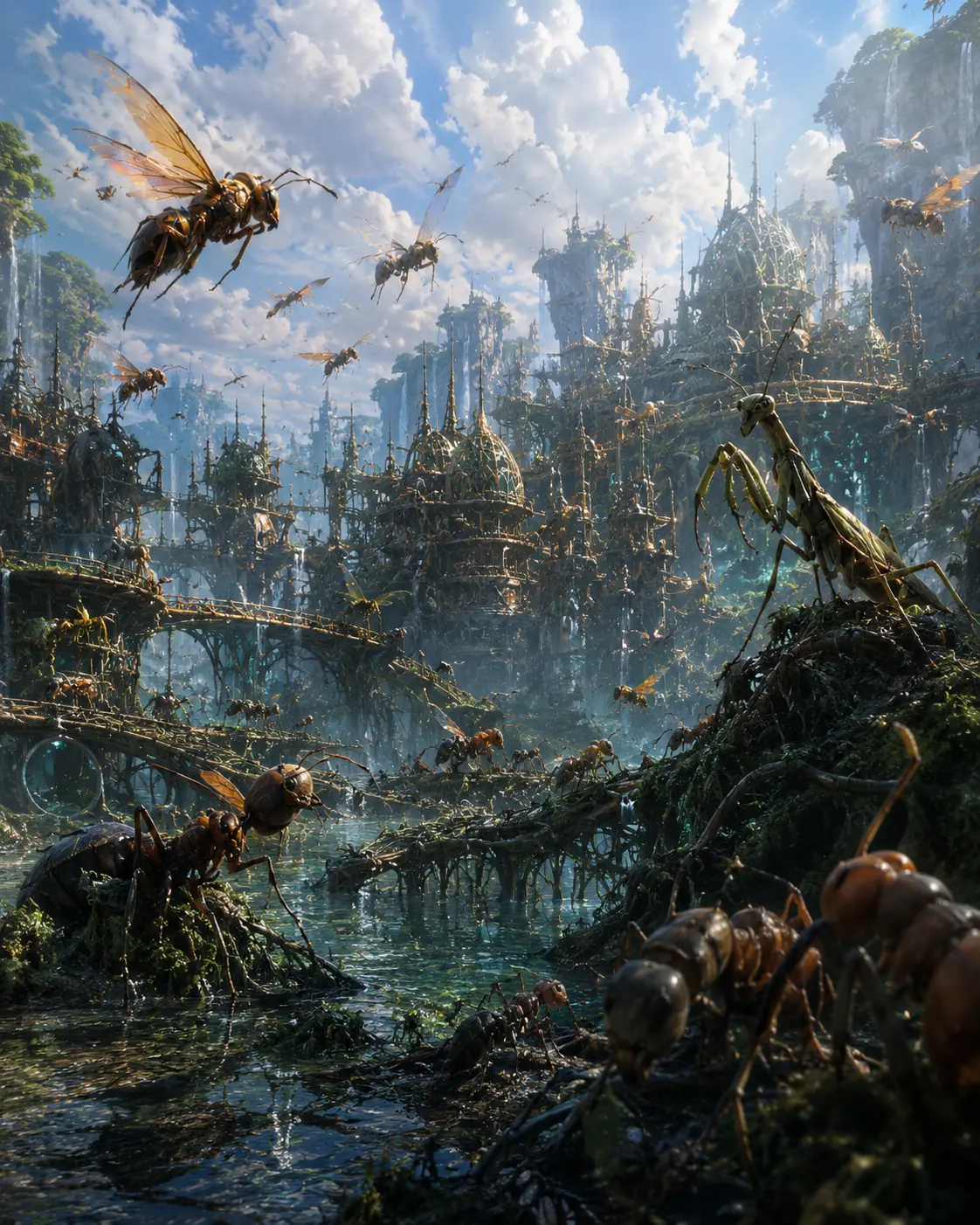
Energy moves through multiple inhabited layers. Megaflora capture light, regulate water, exchange gases, and create enormous surfaces for smaller organisms. Canopy grazers, aerial hunters, decomposers, burrowers, aquatic forms, and symbiotic colonies occupy different volumes rather than a single ground plane. Migration may be vertical as often as horizontal, and the loss of one structural plant species can reorganize an entire regional ecosystem.
Coevolution rewards flexibility
Feathered aerial predators gain perception, planning, communication, and increasingly precise control. Arthropod lineages respond through armor, coordination, chemical sensing, construction, and cooperative defense. Across deep time, the relationship changes from direct predation to competition between tool-using societies. Intelligence is not a sudden miracle; it is a long accumulation of behavioral flexibility, social learning, manipulation, environmental modification, and inherited culture.
The mammalian niche remains small
Mammal-analogues exist but never receive Earth’s combination of opportunity, anatomy, and ecological release. Most remain small seed-eaters, burrowers, scavengers, and prey in marginal or lower trophic niches. They are biologically successful without becoming dominant. The planet’s cities, sciences, histories, and orbital systems therefore belong to beings a human visitor might initially misclassify as birds and insects—until their technology and institutions make the error impossible.