
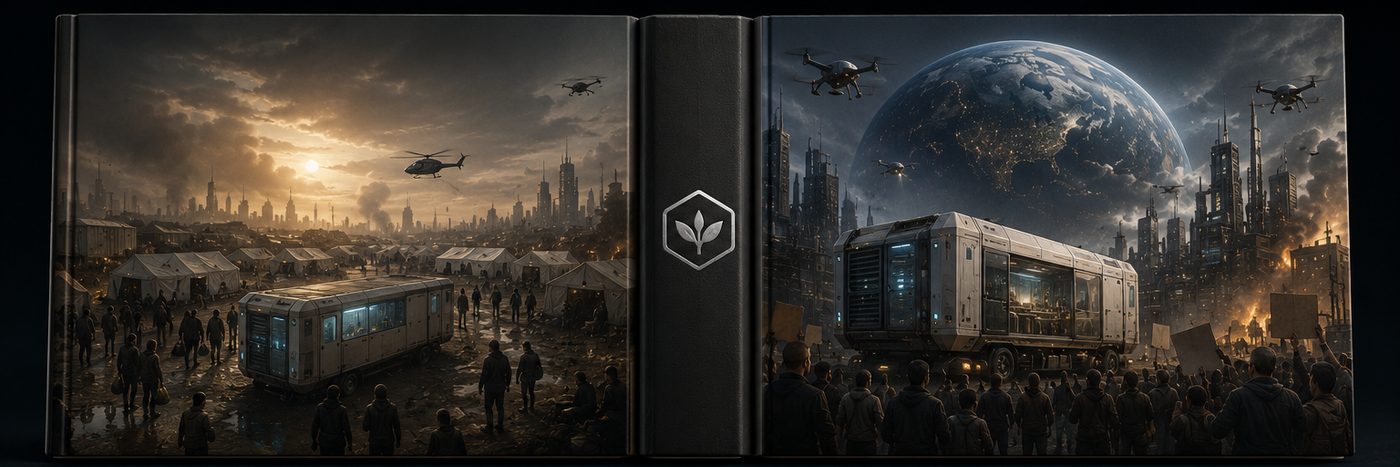
Humanitarian Relief & Rebuilding
A relief machine is not a recovery plan.
NanoFeast can change the first hours and days of a food emergency, but durable recovery still requires water, shelter, healthcare, power, transportation, local authority, livelihoods, culture, and an exit from emergency dependency.
Rapid feeding
Community and industrial systems can stabilize meal access during displacement, storms, fires, conflict aftermath, or infrastructure failure.
Dignity & choice
Relief works better when people retain cultural food preferences, family choice, privacy, and meaningful participation rather than becoming passive recipients.
Local authority
Emergency capacity should strengthen competent local organizations instead of permanently replacing them.
Recovery handoff
The critical story question is when and how a temporary NanoFeast lifeline becomes locally owned, redundant, repairable infrastructure—or is deliberately scaled back.