Nutrition
Nourishment is the purpose
Verified reconstruction patterns must provide appropriate nutrition for children, adults, older people and those with dietary or clinical needs.
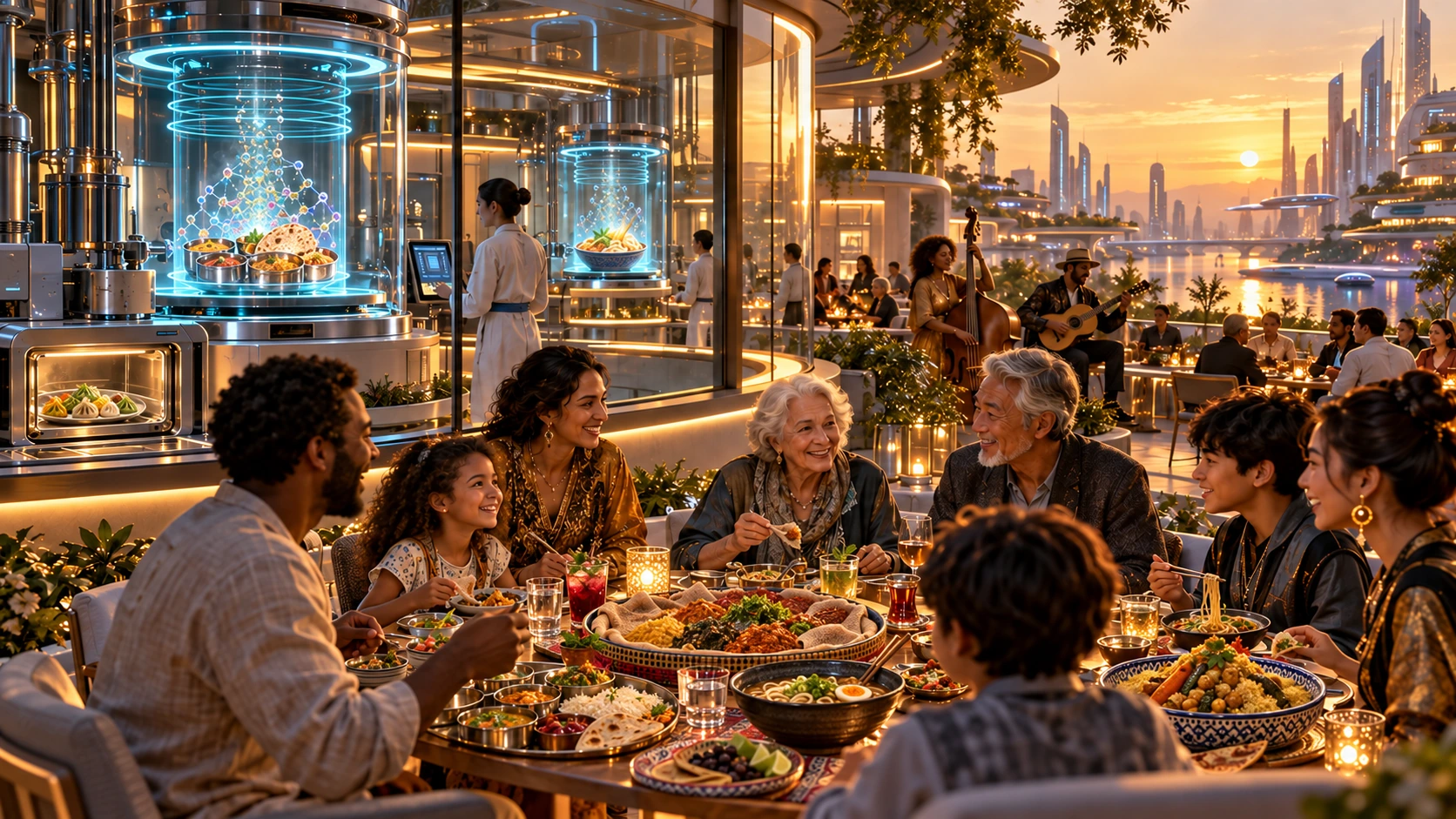
NanoFeast is built to sustain food access when drought, crop failure, livestock disease and broken transport overwhelm the agricultural chain. The Nano Replicator develops the ability to reconstruct nourishing food with progressively independent sourcing and ultimately energy-to-matter creation. People still decide what to eat and what a shared meal means.
Each page reveals a different part of the same story. The active area is highlighted below.
From science to social impact
Nutrition, health and food systems
Farms, soils and food security
Clean water for people and places
Relief, resilience and dignity
Markets, work and shared prosperity
Power, rights and accountability
People, culture and a better tomorrow
These public summaries preserve the current story architecture without turning the site into a technical manual.
Verified reconstruction patterns must provide appropriate nutrition for children, adults, older people and those with dietary or clinical needs.
A system that merely processes crop-derived ingredients remains exposed to failed harvests. NanoFeast’s research seeks to remove that dependence through advanced matter reconstruction and energy-to-matter conversion.
NanoFeast supports national, regional, community and family recipes worldwide. Local cooks shape taste, texture, spice, serving style and cultural meaning; dietary, religious and allergen needs remain part of each verified food pattern.
A meal must be demonstrably safe and nutritionally appropriate. Containment, composition checks, contamination control and reliable records protect the people receiving it.
Rugged replicator hubs first serve the regions facing the gravest shortages, creating nourishing food, drinking water and beverages. Hospitals, schools, shelters and community kitchens anchor wider access as capacity grows.
People can preserve cooking, gardening and traditional foods by choice while essential nourishment becomes less dependent on the success of a harvest.
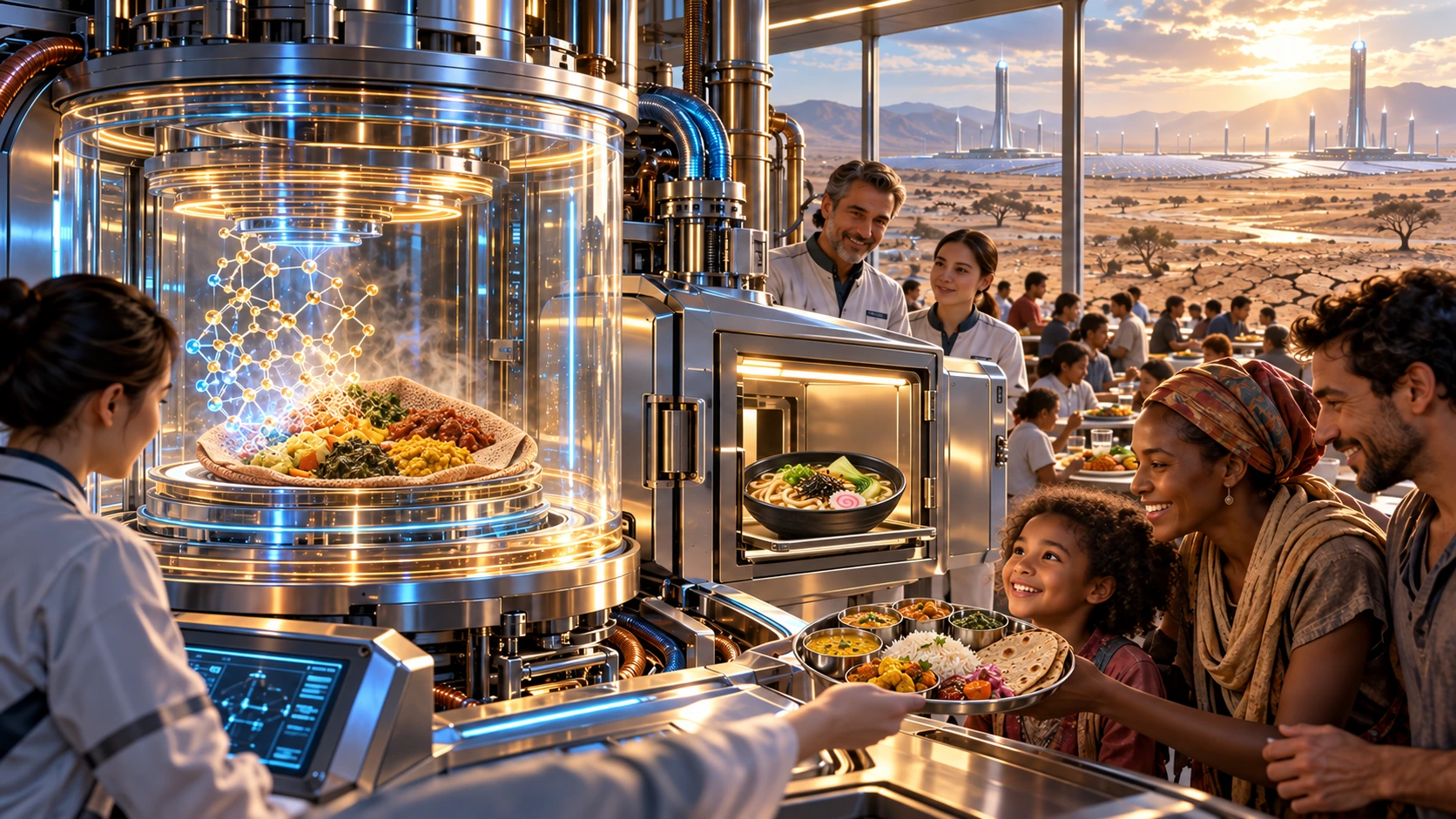
The same food-creation science can serve the cuisines of every country, with patterns shaped by the people who know them.
Dal bhat, injera with stews, jollof rice, noodle soups, couscous, tortillas, bean dishes and countless other foods illustrate the range. These are examples of a worldwide capability, not a fixed menu.
Communities preserve ingredients’ sensory character, cooking textures, spice profiles, meal structures and serving customs in the foods they choose to reconstruct.
People receive familiar, appropriate meals and beverages, with options for religious practice, allergies, clinical needs and personal preference. Nourishment and food culture advance together.