Historical evidence
Crops and livestock share exposure
FAO reports that disasters caused agricultural losses of $3.26 trillion during 1991–2023, including 4.6 billion tonnes of cereals and 2.8 billion tonnes of fruit and vegetables.
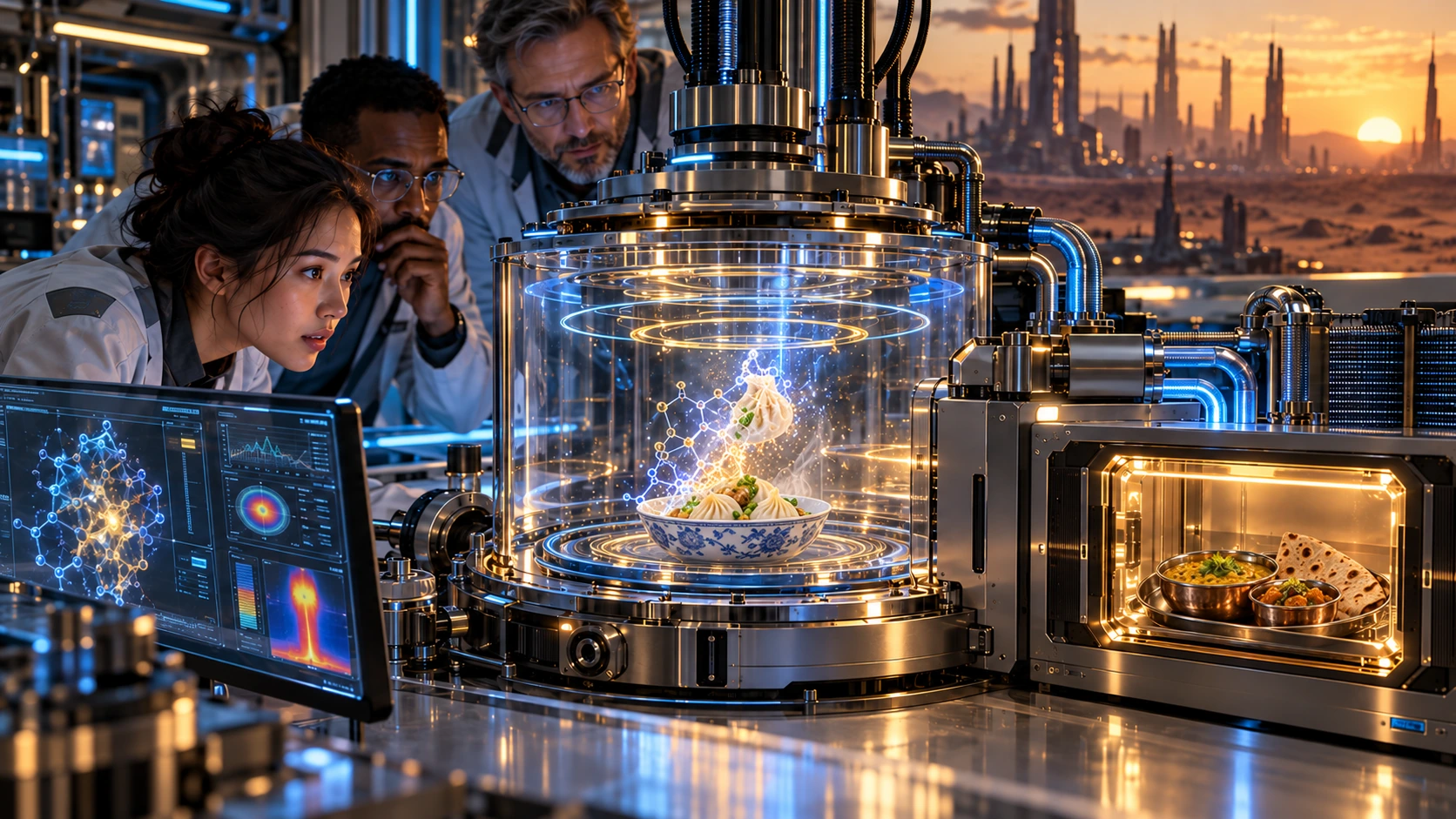
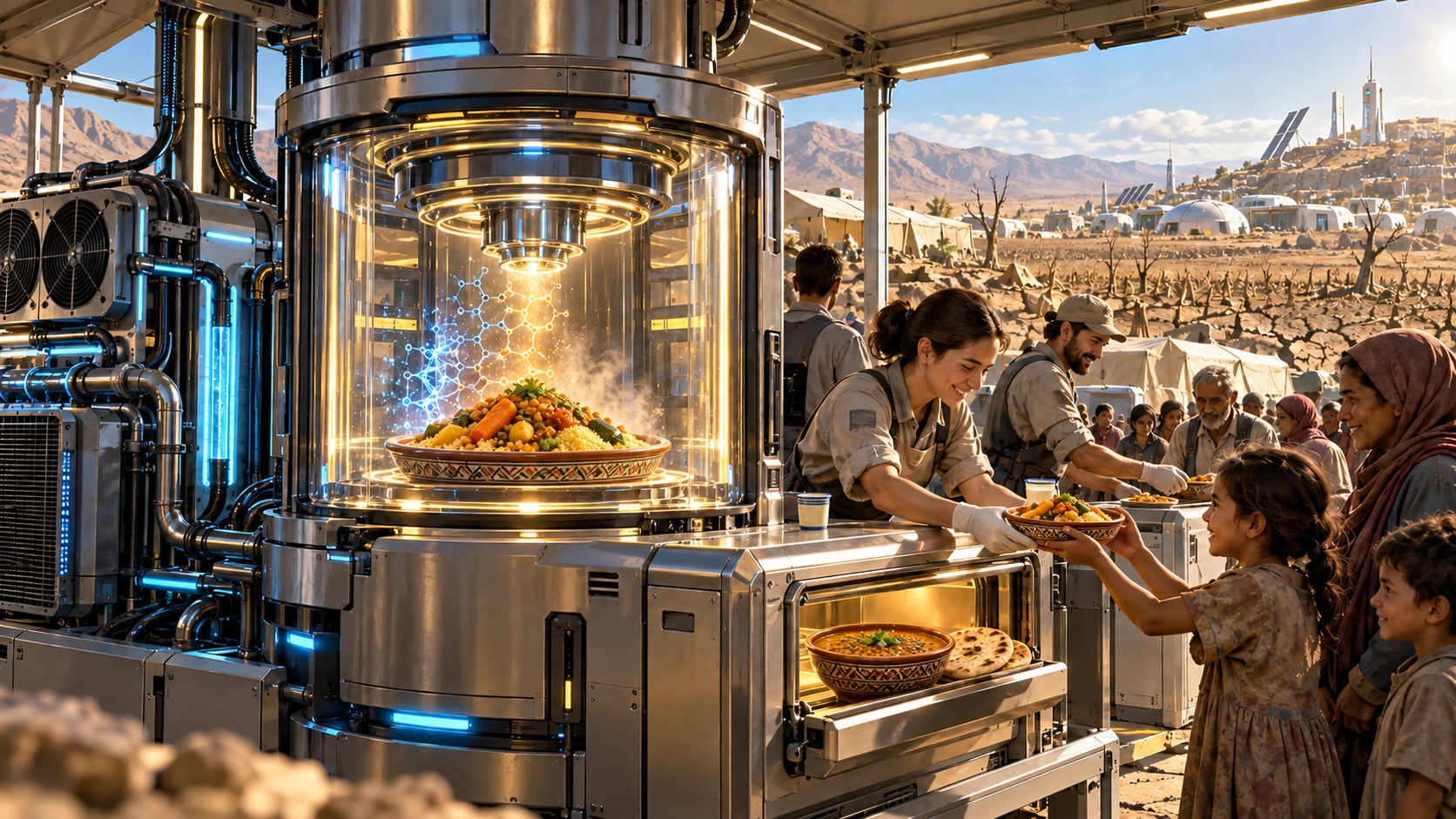
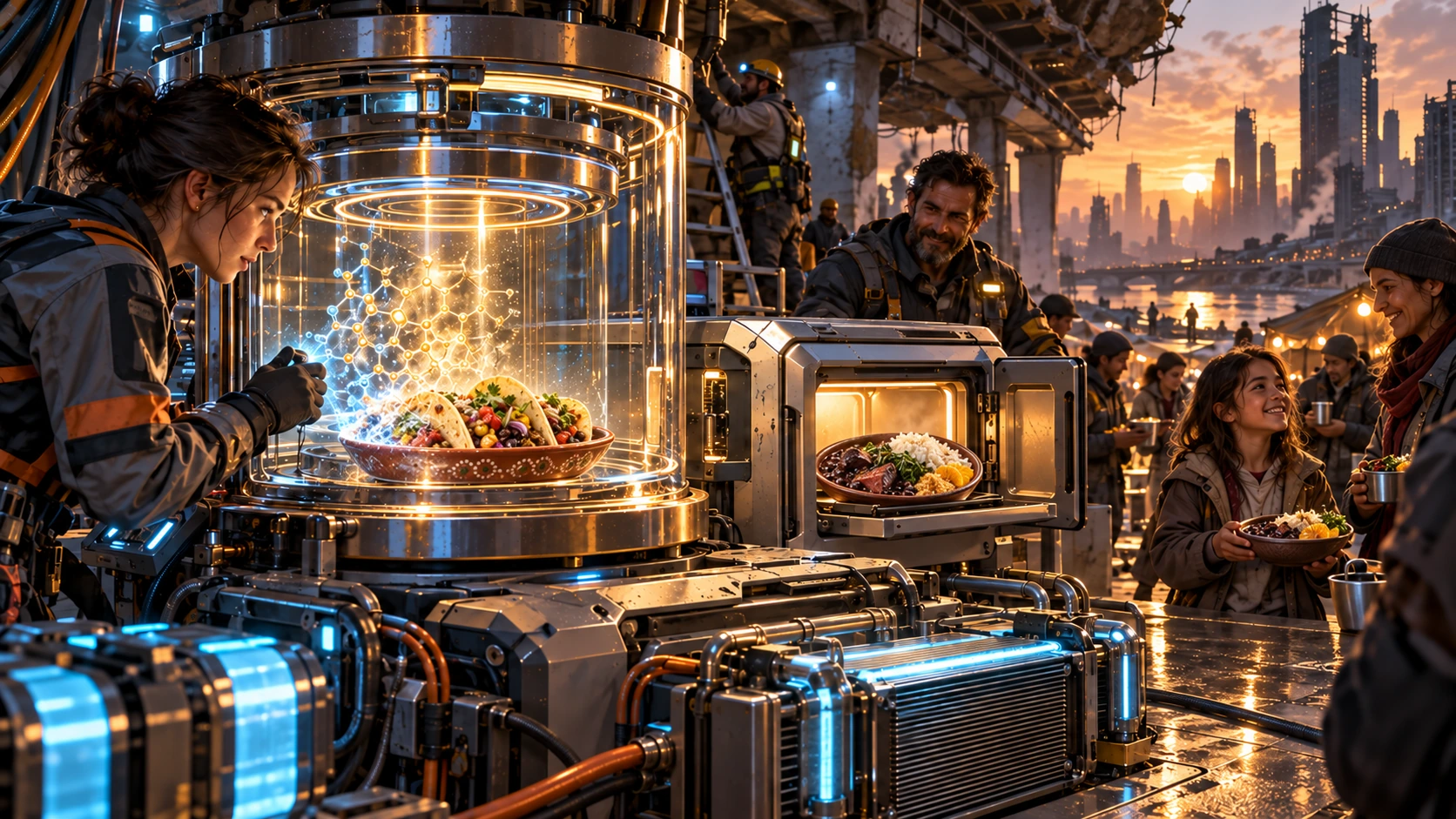
Toward 2099, drought, heat, crop failures and livestock disease have driven the world into an interconnected food crisis. NanoFeast imagines NEXALOOM and the Nano Replicator creating food, drinking water and beverages through advanced matter reconstruction and ultimately energy-to-matter technology. Rugged deployments begin where people face the gravest shortages, then expand to the wider world. A 22nd-century story of scientific discovery, human survival and the struggle to share abundance.
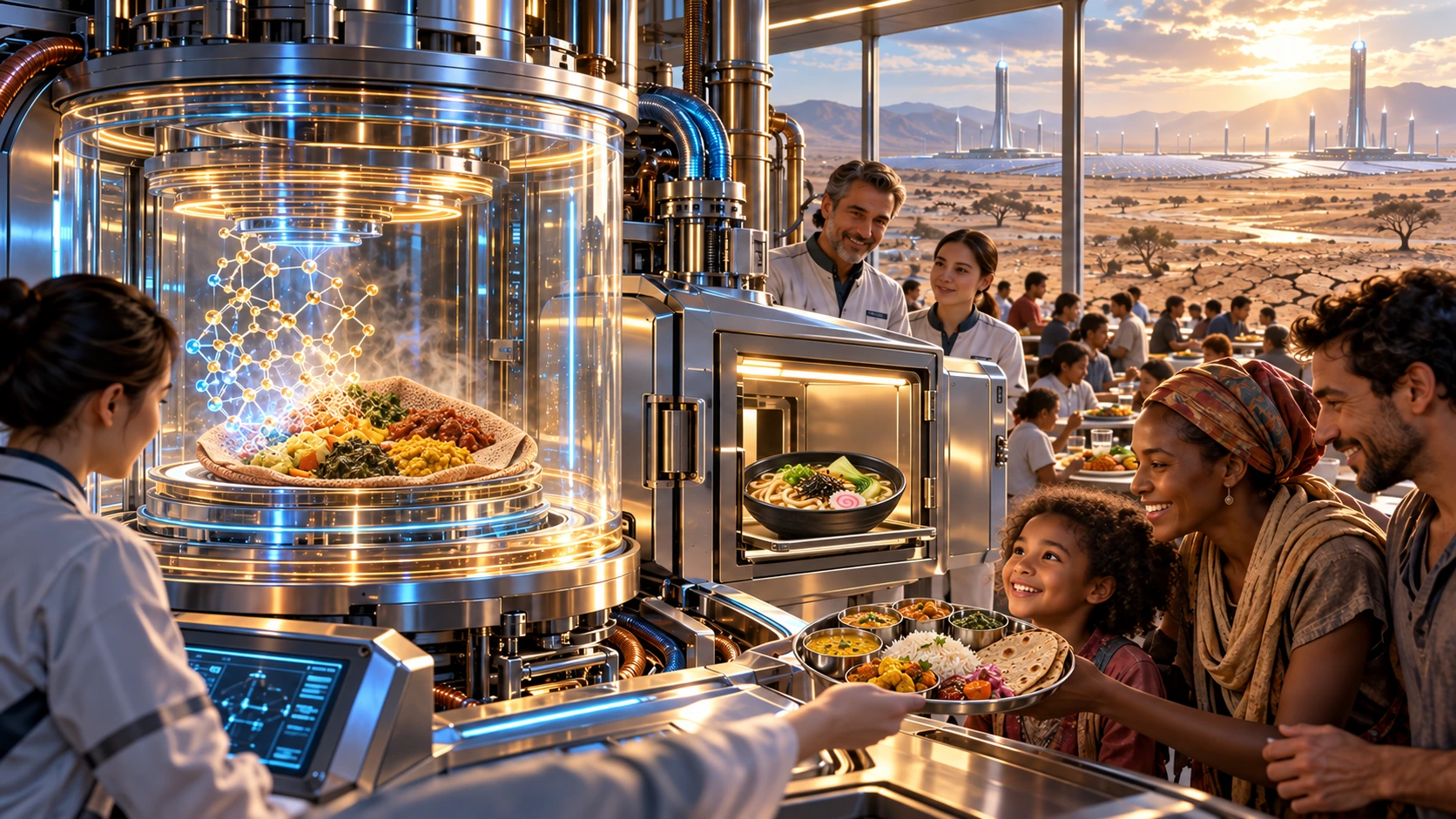
Energy-to-matter food creation in a humanitarian hub — fictional concept rendering
Historical food-system losses inspire the crisis imagined in NanoFeast.
FAO reports that disasters caused agricultural losses of $3.26 trillion during 1991–2023, including 4.6 billion tonnes of cereals and 2.8 billion tonnes of fruit and vegetables.
USDA reports that more than 50 million U.S. chickens and turkeys died or were destroyed during the 2014–2015 highly pathogenic avian influenza outbreak.
NanoFeast develops the speculative leap from dependence on organic ingredients toward independent matter sourcing and energy-to-matter food creation. Its circa-2099 crisis is a storyworld scenario.
Sources: FAO — The Impact of Disasters on Agriculture and Food Security 2025 · USDA — 2014–2015 avian influenza impacts
NanoFeast touches every part of society. Explore the engineering, public institutions and everyday choices that shape the story.
From science to social impact
Nutrition, health and food systems
Farms, soils and food security
Clean water for people and places
Relief, resilience and dignity
Markets, work and shared prosperity
Power, rights and accountability
People, culture and a better tomorrow
The sequence begins with the discovery of food creation and rugged deployments where shortages are greatest. Gradual expansion into the wider world brings battles with incumbent food megacorporations, contested ownership, shadow markets and the challenge of keeping abundance resilient.
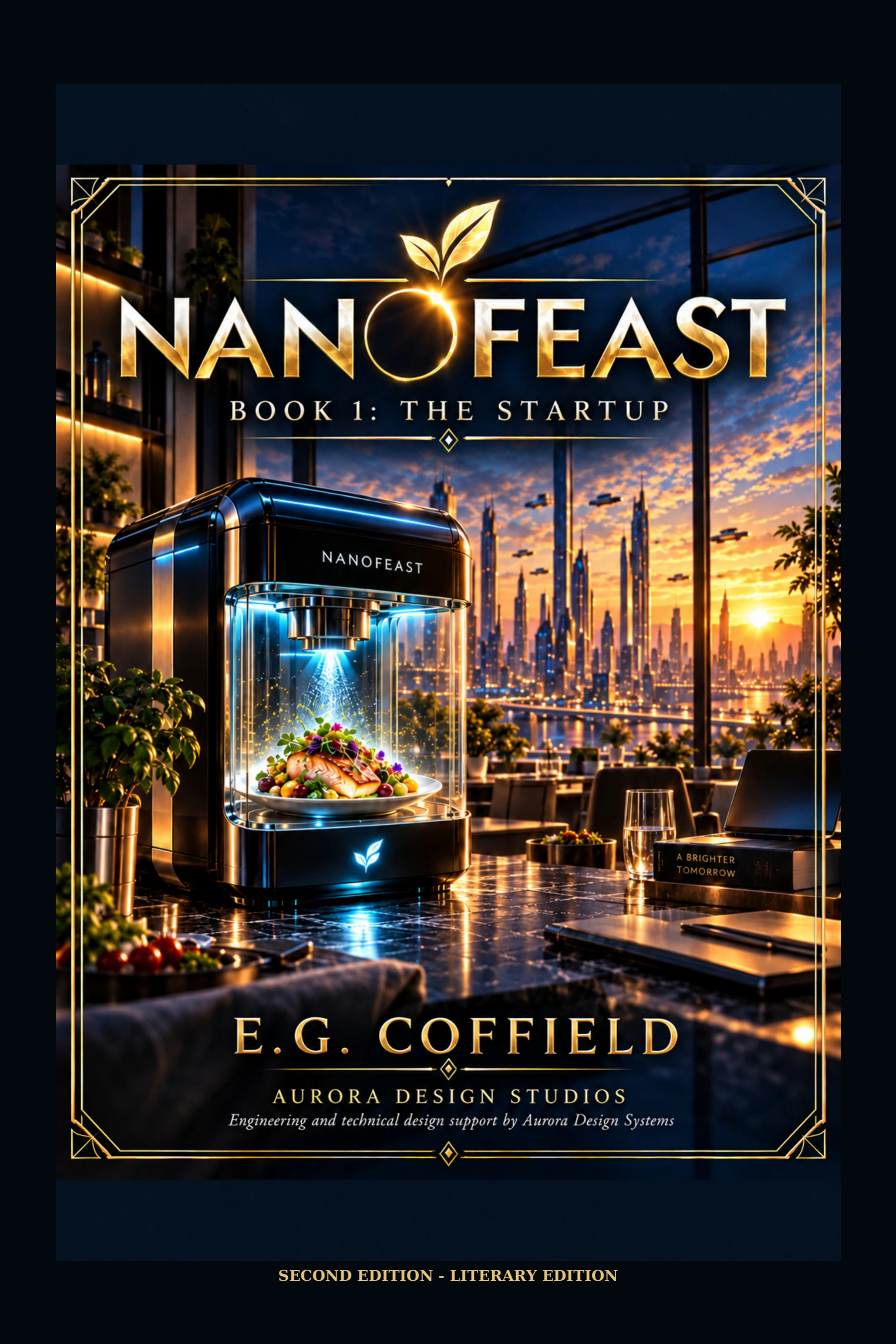
Book I opens the series with the discovery and development of a genuine food-creation technology. Scientific milestones, power and heat constraints, investment pressure and the first consequential decisions about access turn the promise of abundance into a human obligation.
Learn more →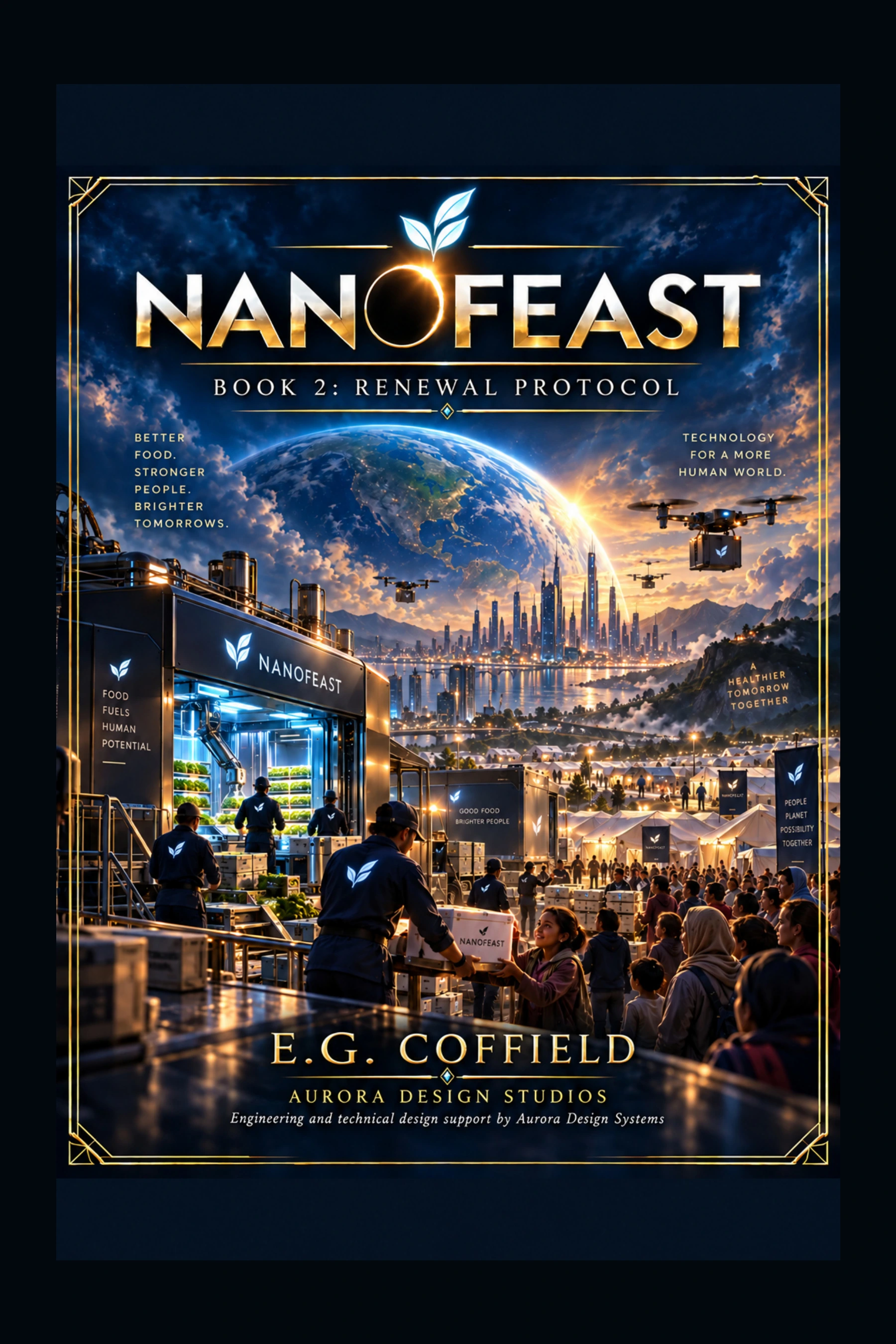
As communities rebuild around the new capability, governments, companies and recipients contest who controls it. The humanitarian mission depends on keeping advanced food creation accessible without turning rescue into permanent political dependence.
Learn more →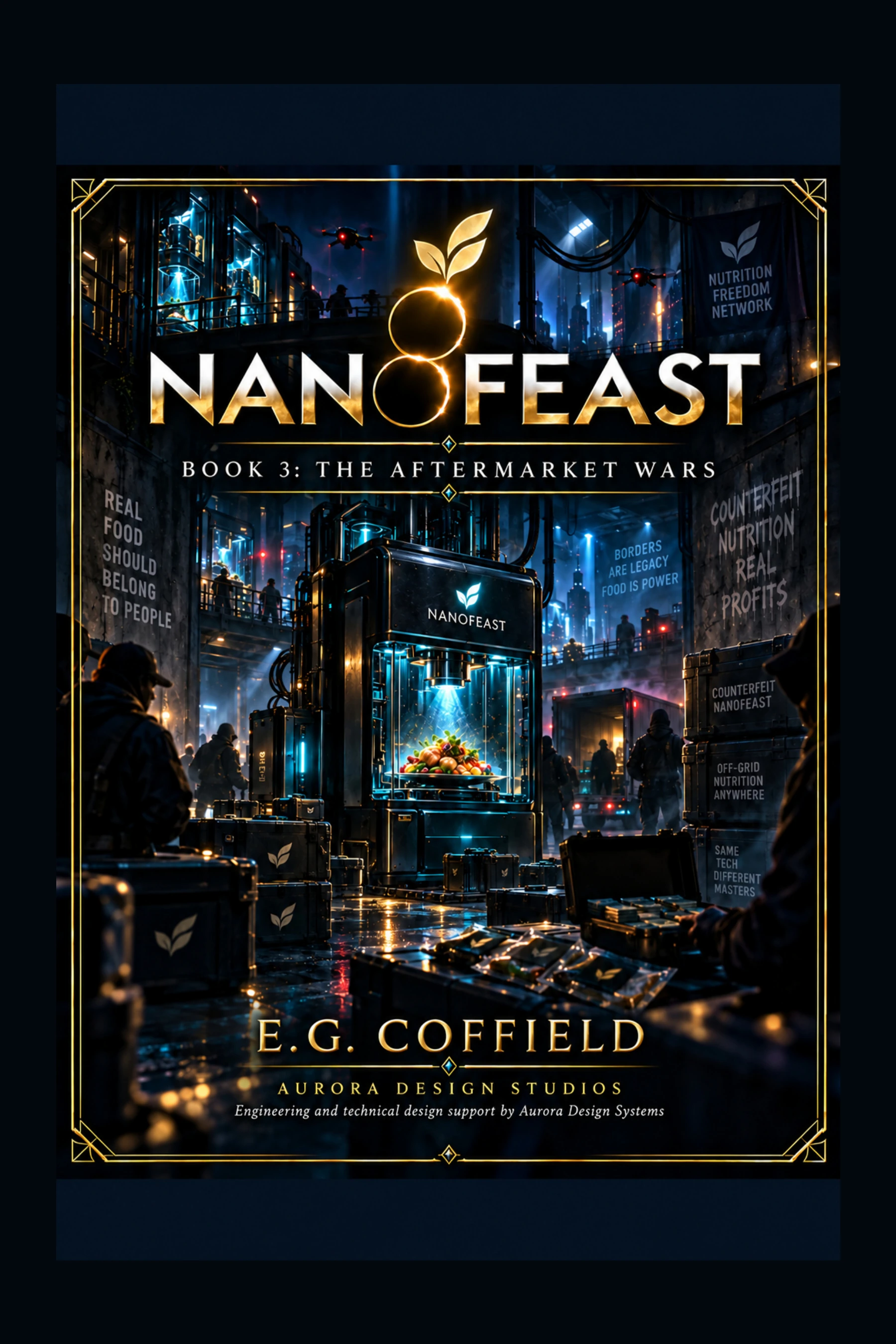
The Aftermarket Wars follows the shadow economy of matter creation. Safety, repair rights and ownership collide with the needs of people whose survival depends on the next verified meal.
Learn more →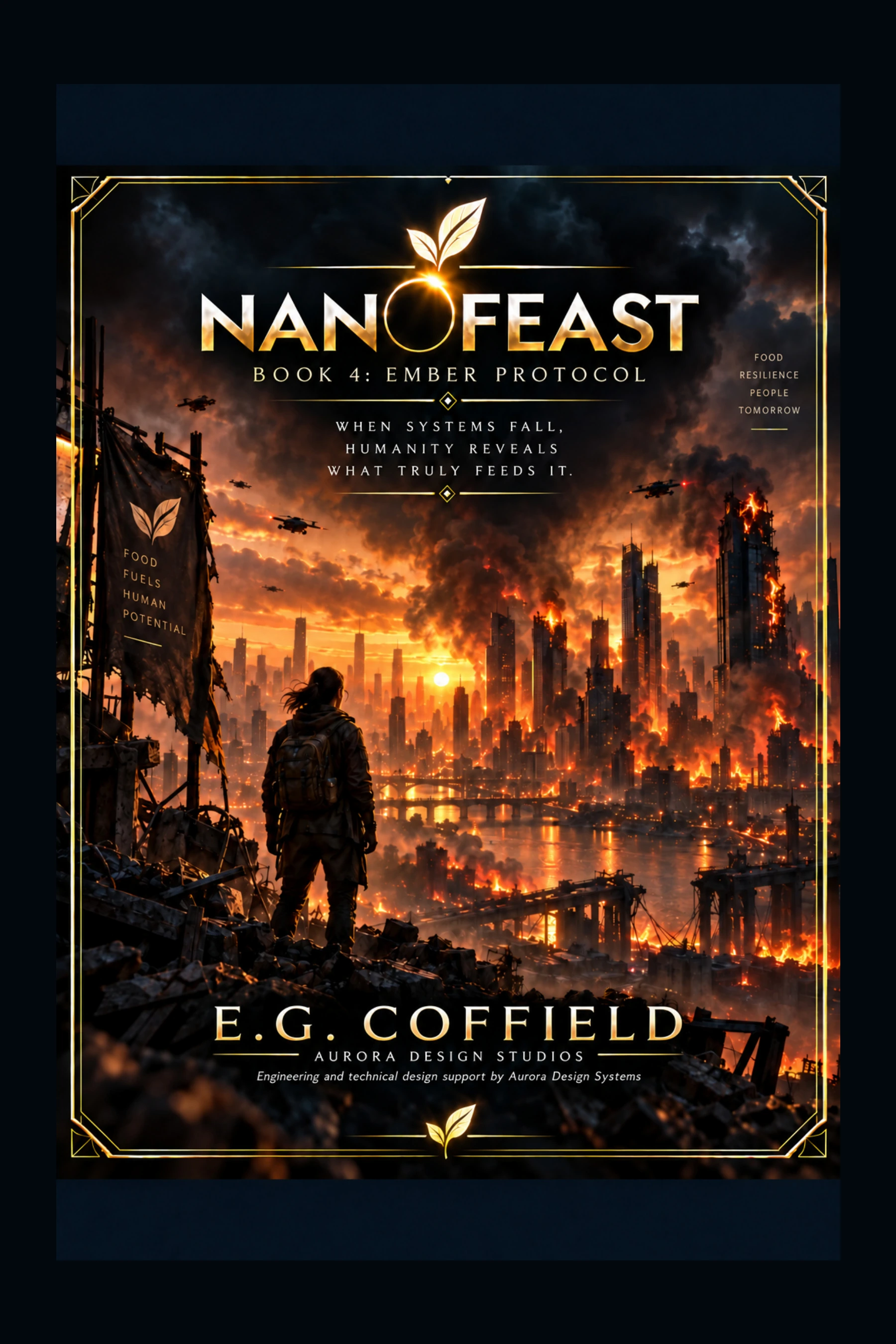
Ember Protocol completes the four-book core with a struggle to preserve the breakthrough through failure. Resilience becomes a question of energy, containment, independent verification and the authority communities need to sustain their own food access.
Learn more →Three companion volumes widen the world into law, culture, local consequences, and shorter global stories without changing the four-book core.
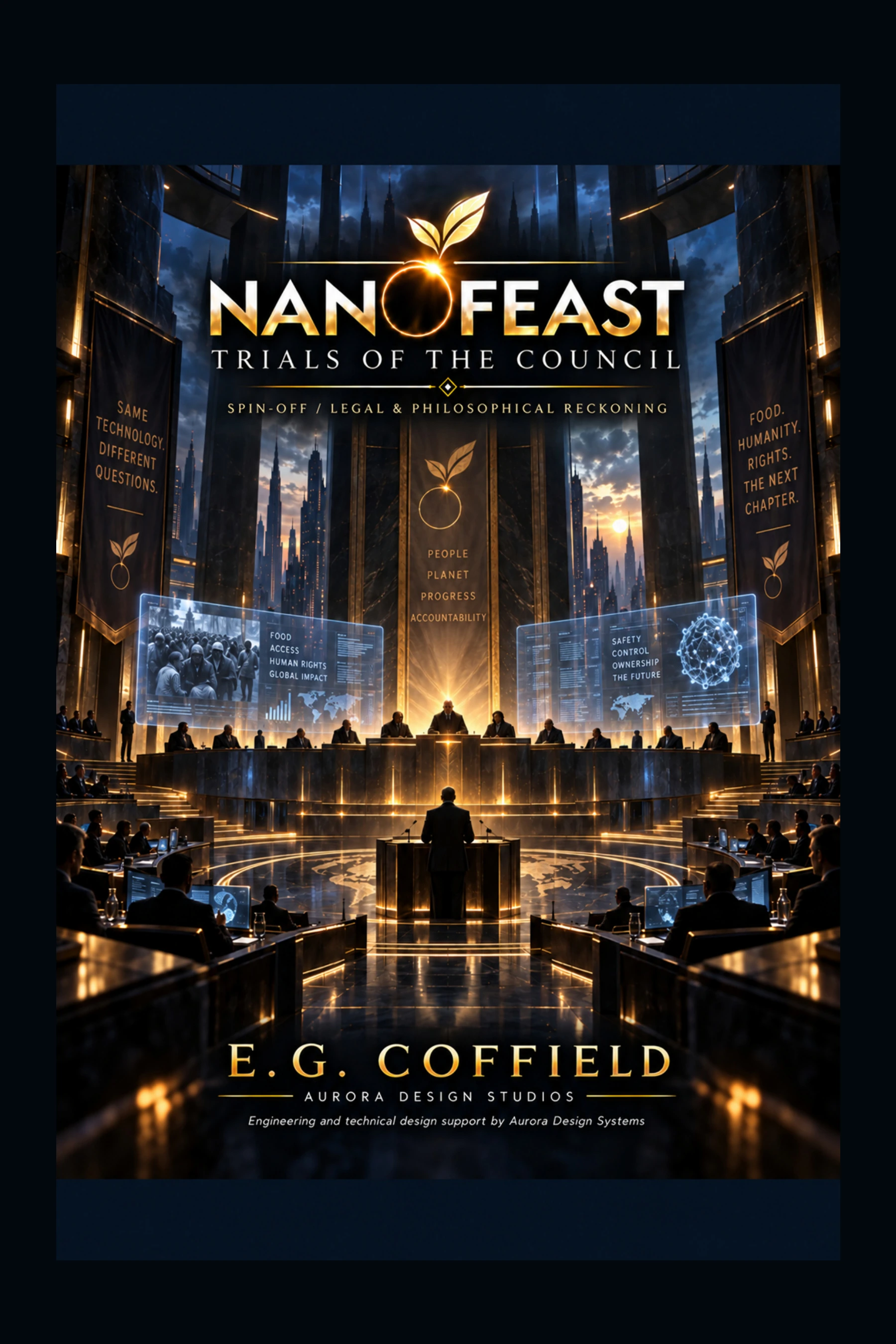
Trials of the Council explores the legal and ethical consequences of the Nano Replicator through competing evidence and lived experience. Its central question is whether a world capable of creating food will guarantee people the right to receive it.
Learn more →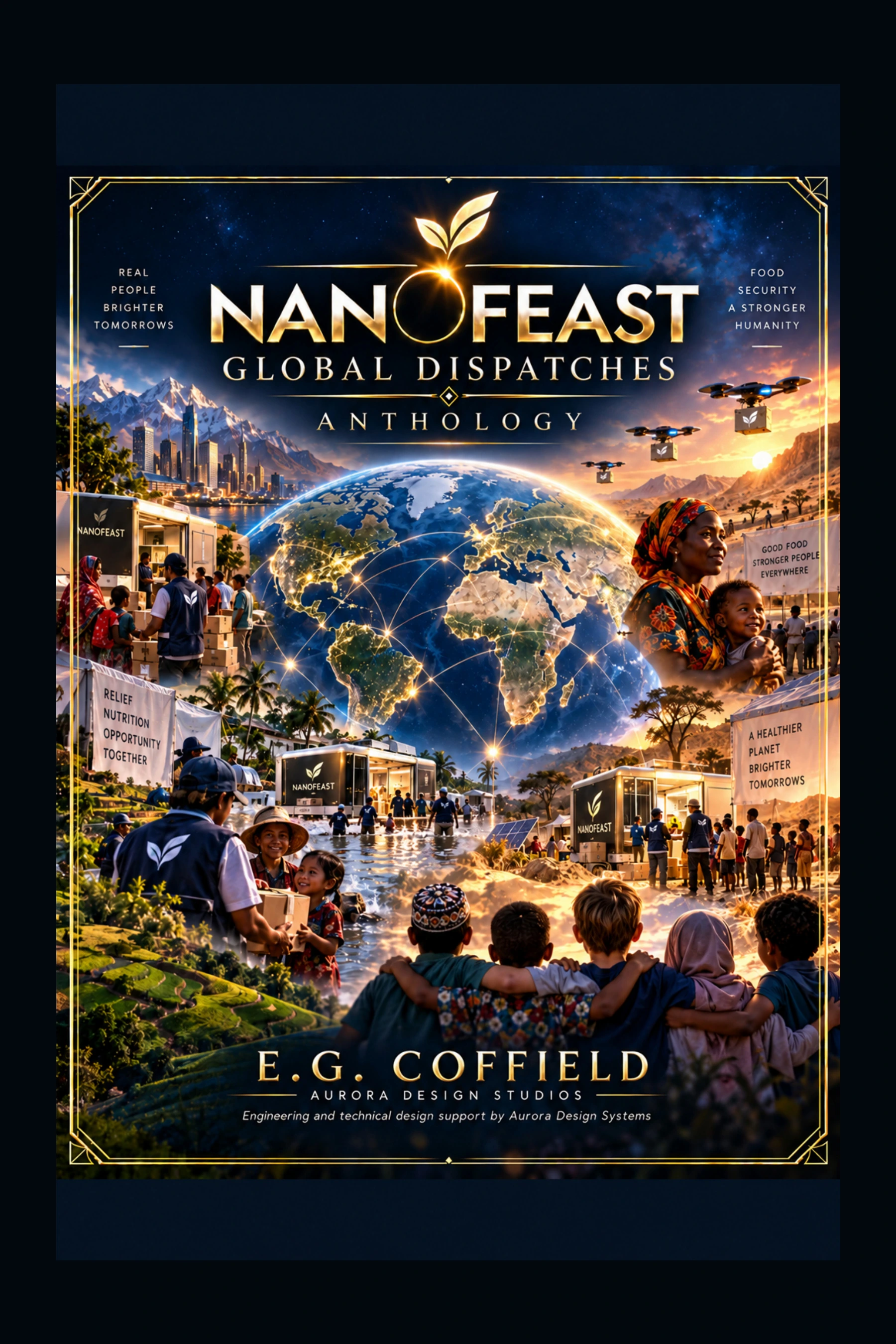
These stories give the global breakthrough a human scale. They follow communities rebuilding beyond agricultural scarcity while preserving the cultural meaning of food and the dignity of deciding their own future.
Learn more →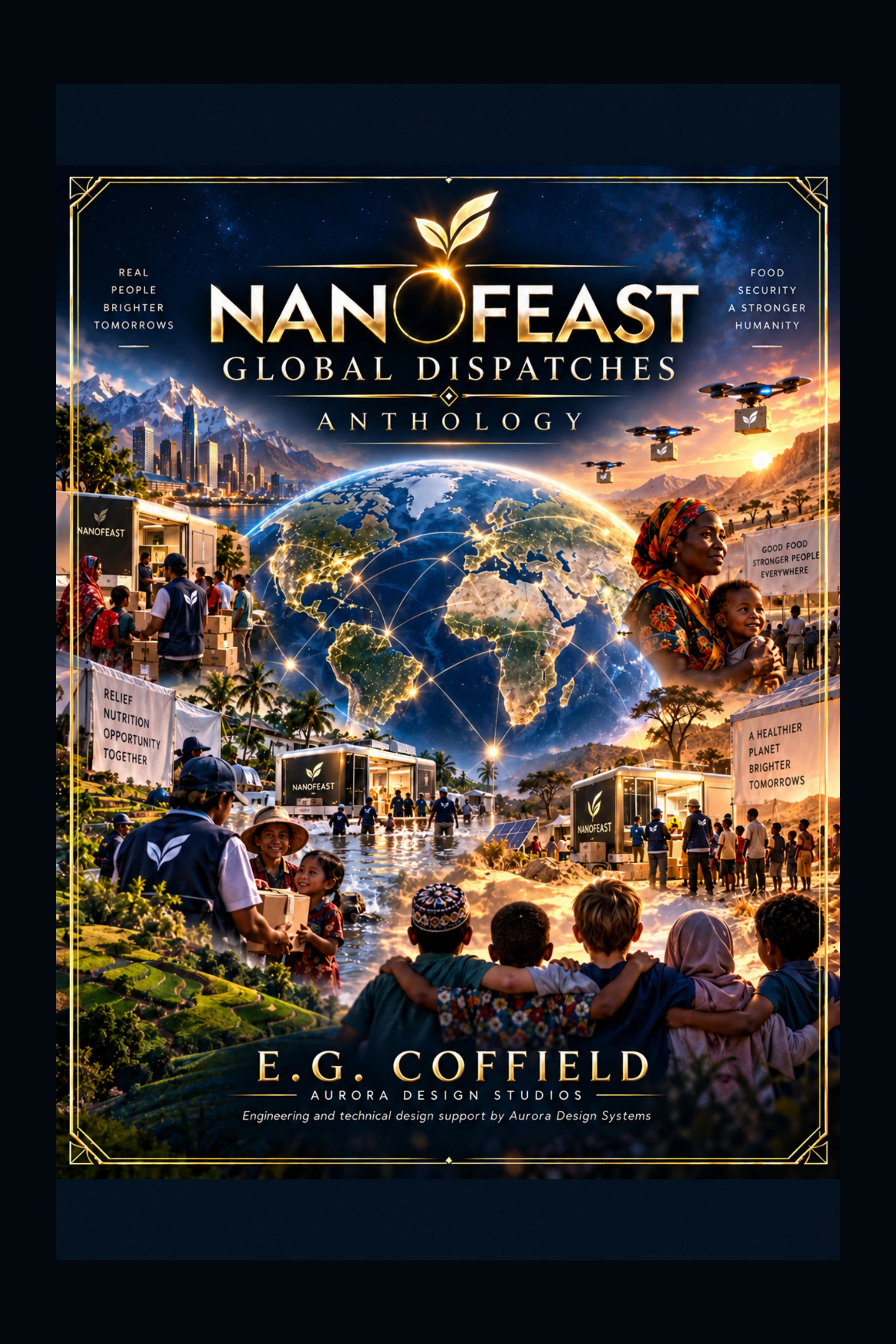
The collection follows the opportunities and unfinished obligations of an abundant world. Freedom from harvest dependence gives communities room to preserve traditions, recover landscapes and imagine lives shaped by more than hunger.
Learn more →The X1–X10 path develops progressively independent matter sourcing, controlled reconstruction and energy-to-matter capability. Research systems, community hubs and regional installations serve different needs while sharing the same purpose: sustaining food beyond agricultural failure.