Galaxy Quest 2: The Lost Horizon
A warm science-fiction comedy/adventure about aging performers, inherited myth, fandom, family, and the civilizations that took fiction seriously.
Project Hook
The fictional crew that once accidentally became real heroes discovers that entire civilizations have now built expectations around the legend—and the universe is far larger than the show ever imagined.
Book Development Lane
The novel can deepen age, family, fandom, public identity, Thermian cultural change, new alien civilizations, the Rift mystery, and the emotional cost of becoming permanently identified with a heroic persona.
Workflow
Existing Spec Script → Novel Development → Novel Canon Lock → Revised Spec Screenplay. Structural and page-count discrepancies remain explicit QC items.
Publisher / Agent Orientation
Positioning: science-fiction comedy, legacy adventure, ensemble story, first-contact expansion, affectionate franchise satire.
Primary dramatic engine: people who once pretended to be heroes must decide what they owe to civilizations that took the performance seriously.
Novel opportunity: expand internal character experience and culture without losing pacing or comedy. The book can show how fandom becomes identity, how myths harden into institutions, and how older performers react when younger people inherit a story they no longer control.
Worldbuilding opportunity: Rift/Architect material, Zerillian pressure, Starforge-scale locations, Protector III lineage, Omega 13 continuity, and next-generation cultures can all grow—but must remain subordinate to people and relationships.
Tone requirement: humor and sincerity must coexist. Neither parody alone nor grim prestige science fiction is sufficient.
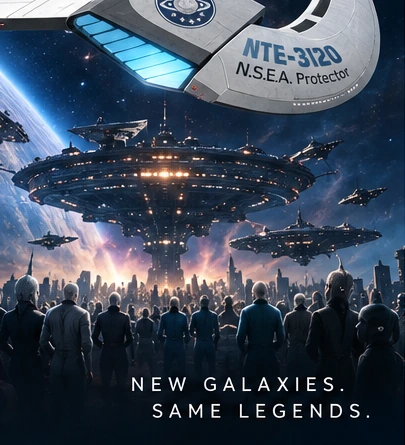
Current Public Status
SPEC SCRIPT + BOOK IN DEVELOPMENT. Full screenplay material remains controlled and is not posted openly.
Rights boundary: Independent speculative continuation based on pre-existing third-party IP. Aurora Design Studios claims no ownership, affiliation, endorsement, or authorization. Commercial book, film, television, or other derivative use requires permission from the applicable rights holder.