Galaxy Quest 2: The Lost Horizon
The actors who once accidentally became heroes now face a universe that has spent years turning their old television mythology into something much larger.
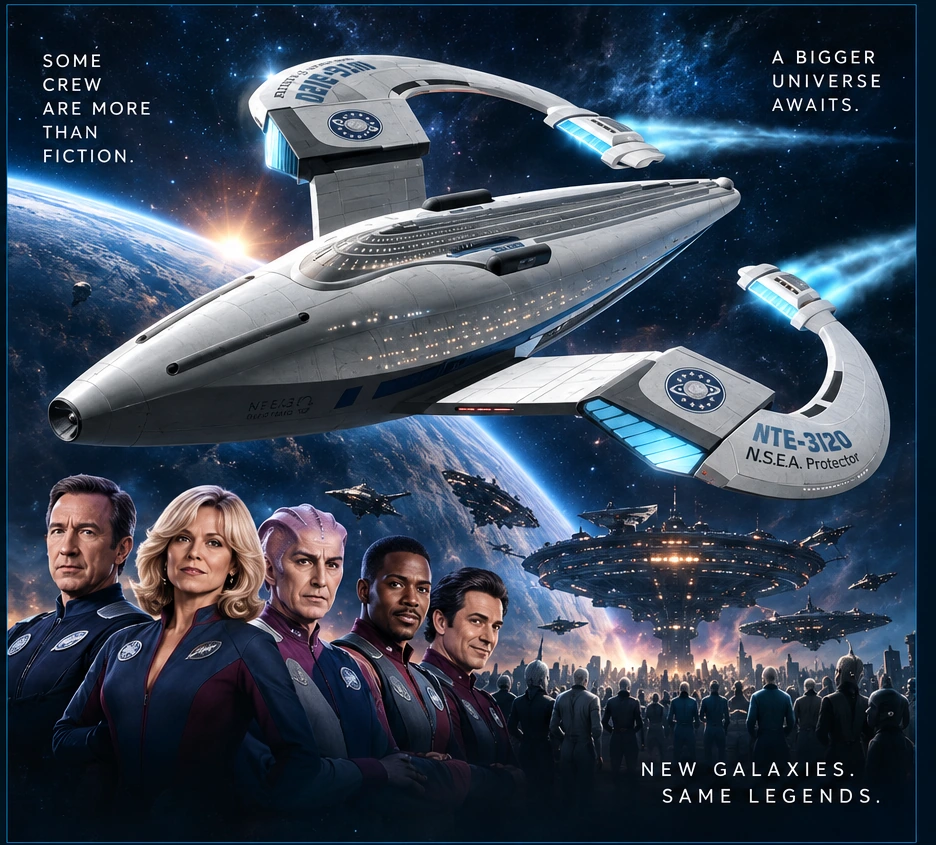
Legacy Cast
Jason Nesmith, Gwen DeMarco, Fred Kwan, Guy Fleegman, Tommy Webber, and Laliari return older and more experienced. The joke is no longer that actors accidentally became heroes once; it is that entire cultures now expect the people behind the old television roles to live up to what the myth became.
A Bigger Universe
The Lost Horizon expands beyond reunion nostalgia through the Rift, Zerillian pressure, Architect structures, Starforge-scale environments, the Protector III lineage, and Omega 13 technology. Fictional knowledge can still help—but it cannot replace engineering, diplomacy, grief, or command judgment.
New Generation
Tal, Serak’Voth, Zu’rath, and the next-generation family material create pressure from people who inherited Galaxy Quest as doctrine, history, or cultural expectation rather than television entertainment.
Source-Grounded Overview
The Lost Horizon works when comedy and emotional consequence remain inseparable. Years after the original adventure, the performers are older, their relationships have accumulated history, and the Galaxy Quest myth has grown larger than any one of them. What once began as a mistaken reading of television has matured into an interstellar legacy.
The story’s central tension comes from cultures that no longer treat Galaxy Quest as harmless fiction. Some use it as doctrine, precedent, inspiration, or proof of how humans are supposed to act. That creates both comedy and danger. An old episode may suggest a tactic, but it cannot solve a real diplomatic crisis or repair a damaged vessel. A catchphrase may inspire courage, but it cannot substitute for making the right decision when people can actually die.
The larger mystery involves the Rift, Architect structures, Zerillian pressure, and civilization-scale environments that push the returning crew beyond the Thermian experience they already understand. That scale matters only if the human stakes stay visible: aging, family, regret, public identity, and the fear that a role once performed for entertainment may have become a permanent obligation.
Jason and Alex need visible family stakes. Fred and Laliari remain an important bridge between human performance and Thermian life. Tal and Serak’Voth allow the next generation to move from fandom, certainty, or inherited expectation toward earned competence. The result should feel warmer and more human as the universe gets larger—not colder.
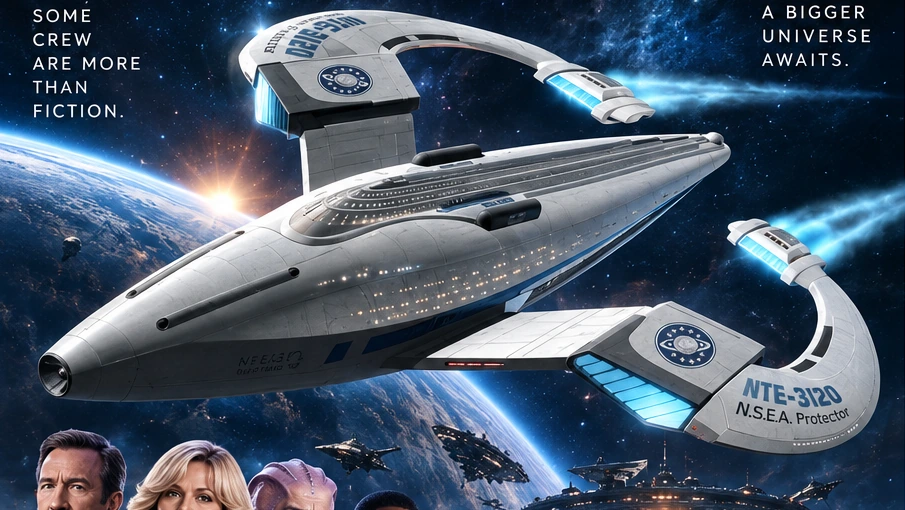
Tone Lock
Warm, funny, adventurous, self-aware, and sincere. It must never become a grim space opera that merely borrows Galaxy Quest names and imagery.
Source-control note: The source anchor remains Galaxy Quest The Lost Horizon.pdf. Current records contain conflicting page-count/version references (348-page site listing, 298-page prior production/QC review, and an earlier Version 07 development state of 119 pages through Scene 28). Those differences remain a QC flag and are not silently normalized here.
Rights boundary: Independent speculative continuation based on pre-existing third-party IP. Aurora Design Studios claims no ownership, affiliation, endorsement, or authorization. Commercial book, film, television, or other derivative use requires permission from the applicable rights holder.