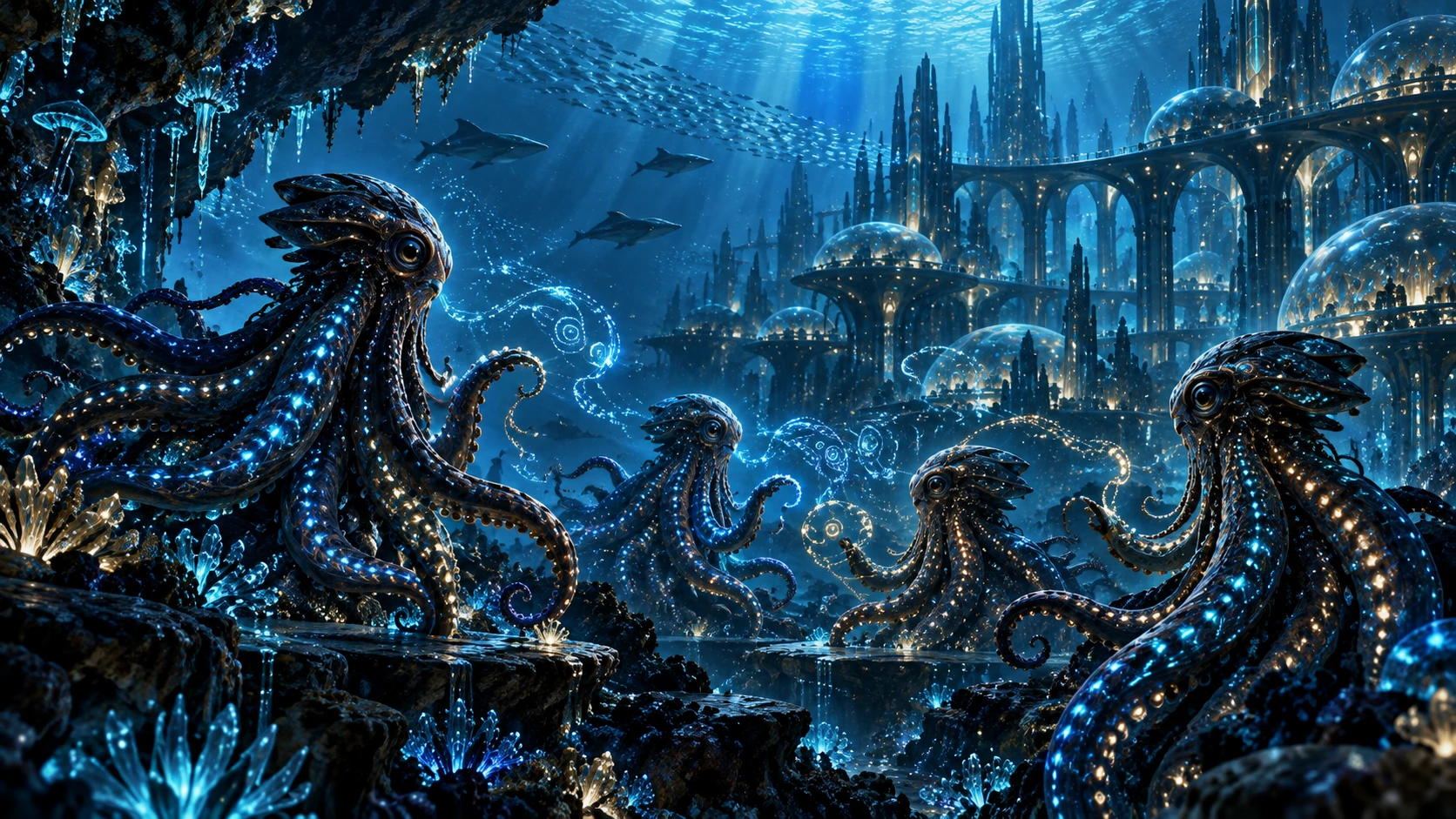
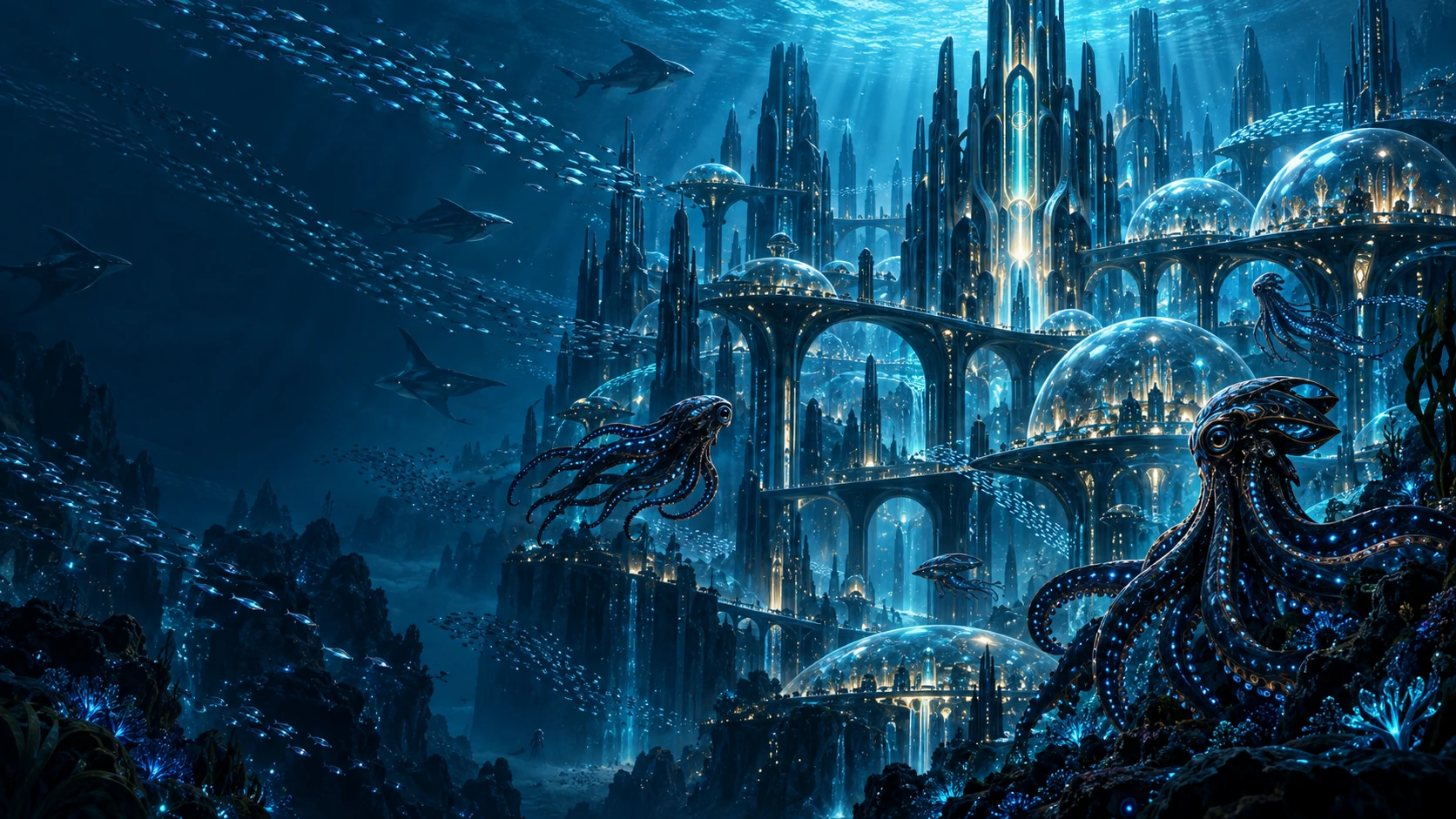
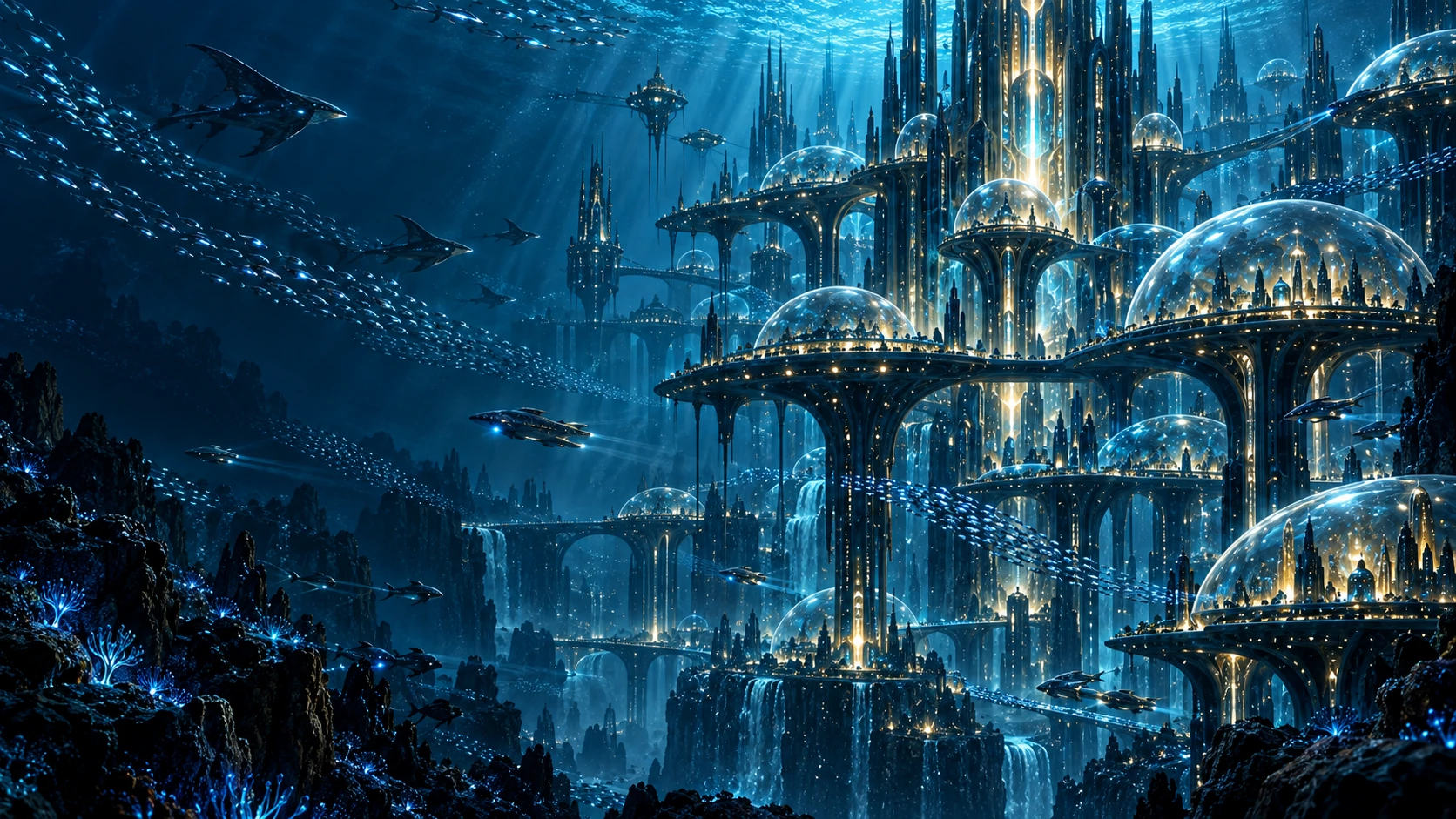
An ocean planet, not a planet made only of water
Nerathis has a global liquid-ocean surface with no exposed continents or permanent rock islands. Below the water, its interior remains substantial: a mineral seafloor, rocky mantle and differentiated metal-rich core. “100% waterworld” refers to surface coverage, not the planet’s total material composition.
A molten interior beneath immense water
The current design uses a partially liquid metallic core sustained by the planet’s thermal history. Internal heat can drive mantle dynamics, fracture systems and chemical disequilibria that support ocean ecology. Not every part of a deep ocean automatically contacts the rock: if pressure becomes sufficiently high, dense solid phases of water can separate the liquid ocean from its mineral substrate. The final depth and gravity model must resolve how nutrients and thermal energy pass through—or around—such layers.
A water-rich birth and a long impact era
The leading fictional formation model combines water-bearing building blocks, possible migration through a colder part of the system, and intense early delivery by icy planetesimals and comets. Repeated impacts can augment an ocean inventory, but impactors also supply heat, strip atmosphere or eject water. An exact source fraction and chronology are deliberately left unresolved pending planetary calculations.
A submerged crust, not hidden continents
The mantle supports seamounts, rift basins and perhaps volcanic provinces, all below sea level. Mineral cycling, hydrothermal chemistry and sediment delivery shape the habitats in which biological and technological history unfold. The planet’s topography is geological—but its visible geography is wholly oceanic.
Life before civilization
Ocean circulation, light penetration, hydrothermal gradients and nutrient transport create different evolutionary arenas. The Thalassari lineage emerges from this independent biosphere after a deep evolutionary history; no transplanted species or prior offworld settlement is required to explain its origin.