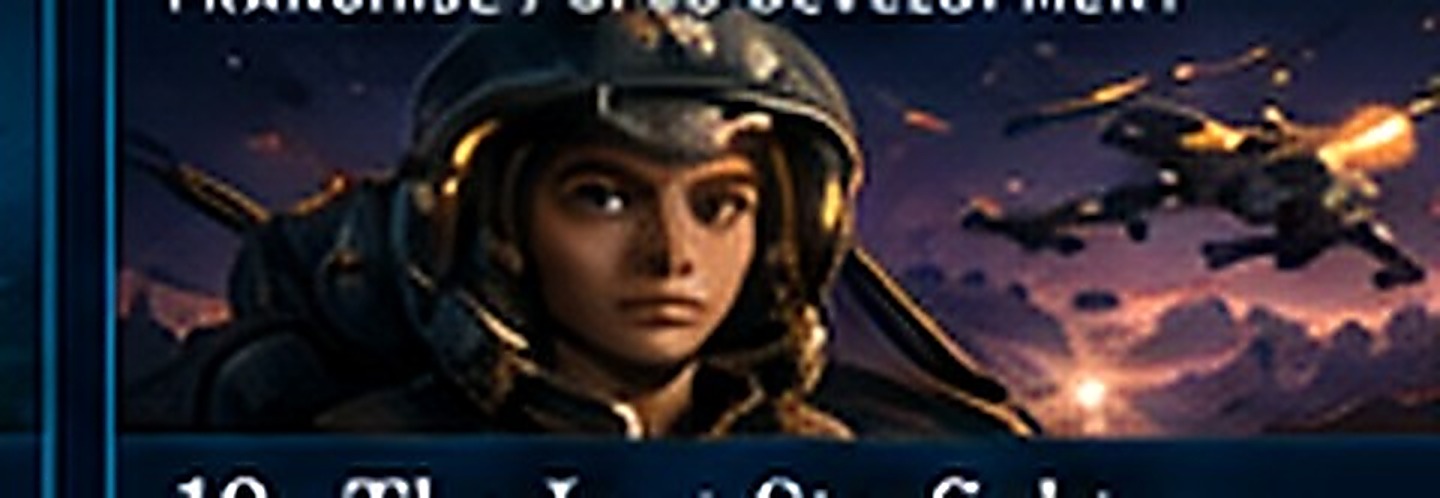
⭐ The Last Starfighters: Legion Reborn
A new generation of pilots discovers an old recruitment myth was real and must fight a rising enemy before a dark prophecy overtakes the frontier.
Public Pitch Treatment
Logline
Forgotten recruits, obsolete arcade mythology, and a new generation of unlikely pilots are pulled into an interstellar war everyone thought had already been won.
Set-Up
The continuation begins with the old recruitment myth fading into nostalgia. The arcade machines are gone, the legends are misremembered, and the frontier defense system has been neglected by civilizations that mistook peace for permanence. A new generation encounters the signal not as a game cabinet but through modern networks, simulations, and buried code.
Inciting Movement
An attack on a remote defense outpost proves that the old enemy, or something worse inspired by it, has returned. The remaining veterans are too few, the alliance is politically tired, and the new recruits do not understand that the game was never metaphor. They are selected because of instinct, courage, and pattern recognition, not because they are prepared.
Act II / Story Engine
The engine is training under impossible stakes. Young pilots learn that hero fantasies are easier than command responsibility. Older survivors must decide whether to protect the next generation from the truth or trust them with the burden. The story can balance adventure, humor, and loss while expanding the mythology of the frontier.
Finale Promise
The climax should allow the new legion to win through cooperation rather than lone genius. The emotional handoff is essential: the last starfighter is no longer one chosen person, but a lineage of ordinary people who answer when called. The ending opens a clean series pathway of frontier missions, legacy mentors, and cosmic threats.
Character & Stakes
The treatment page is intentionally written around character pressure, not just franchise recognition. The concept has to prove that the returning world can support a new emotional problem: a person or group under stress, a choice that cannot be solved by nostalgia, and a consequence that changes the meaning of the continuation. That is the difference between a sequel idea and a pitchable story branch.
Tone / Market Lane
Optimistic, adventurous, nostalgic without being trapped by nostalgia, and built for broad science-fiction family appeal. The public page is designed as a professional summary rather than a rights claim: enough story architecture to show craft, restraint, and market understanding, while keeping full screenplay material controlled for request-only review.
Professional Use
For an agent, manager, producer, or development reader, this treatment functions as a fast-read proof of concept. It clarifies the hook, the story engine, the tonal lane, and the controlled adaptation boundary before anyone needs to review script pages. The intent is to show discipline: a concise premise, a clear act movement, a professional rights posture, and enough visual identity to make the project feel organized rather than improvised.
Page Strategy
The page should sell confidence quickly: one strong image, one clean logline, one readable treatment, and links to deeper controlled material. It should feel like a prepared development packet, not a fan archive. The goal is quick confidence: the reader should understand the world, conflict, audience lane, and professional boundary before clicking deeper.
Rights Boundary
This is an unofficial writing sample and franchise-sensitive development exercise requiring rights-holder authorization before any franchise use. It is presented for portfolio organization, discussion, and controlled professional review only. No ownership, authorization, affiliation, endorsement, transfer, or sale of underlying third-party franchise IP is claimed or implied, and full script material should be circulated only under appropriate professional conditions.