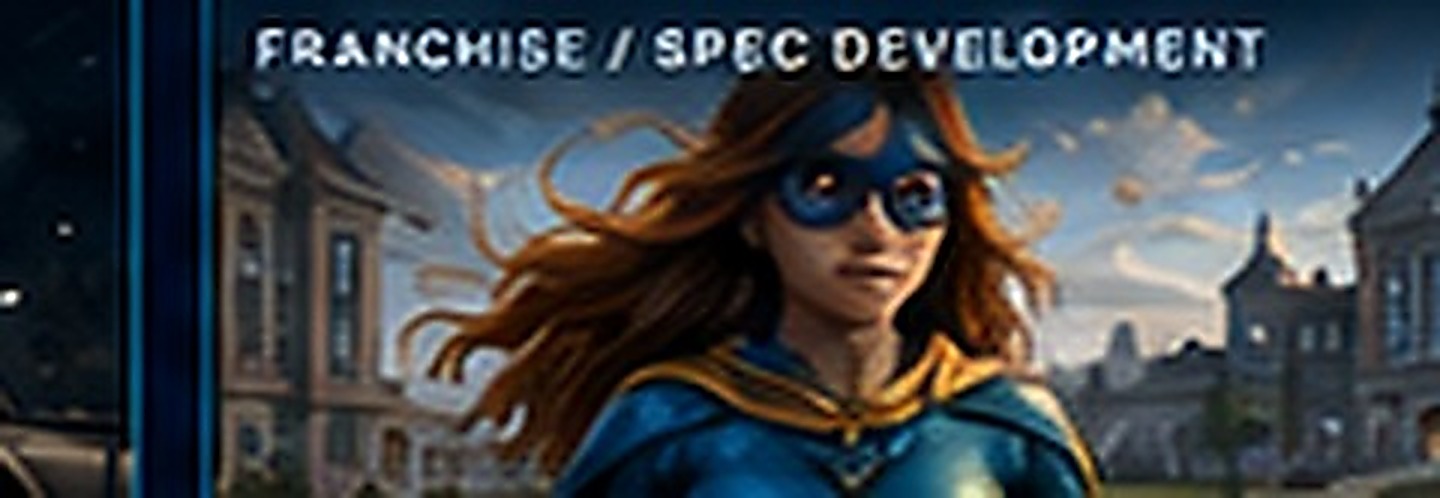
🛡️ Sky High 2: Legacy of Heroes
A new generation of superpowered students must rise as legacy pressure, classification politics, and emerging threats push hero school toward crisis.
Public Pitch Treatment
Logline
A new generation of legacy students enters a hero system obsessed with rankings, branding, and inherited power, only to discover that heroism cannot be standardized.
Set-Up
The sequel returns to the superhero-school premise after the culture around heroes has professionalized. Power classification, scholarship tracks, sponsorships, public rankings, and family legacy shape every student’s future before they have a chance to define themselves. The children of heroes inherit expectations as heavy as any villain threat.
Inciting Movement
A new student cohort uncovers irregularities in the system that assigns roles, status, and career paths. Some students are being pushed into hero identities they do not want; others are being dismissed as sidekicks because their powers do not fit the metrics. A hidden threat exploits that hierarchy by turning overlooked students into weapons.
Act II / Story Engine
The engine is school pressure plus adventure stakes. Friendships form across rank, legacy, and insecurity. Faculty and parents believe they are protecting the next generation, but their system teaches performance before courage. The young heroes must learn that power is not the same as purpose, and that inherited symbols can become cages.
Finale Promise
The climax should allow the students to break the evaluation system by saving people in ways no chart predicted. The victory is not merely defeating a villain, but forcing the institution to admit that heroism is situational, relational, and chosen. The ending sets up a sustainable youth-adventure series lane with humor, heart, and generational conflict.
Character & Stakes
The treatment page is intentionally written around character pressure, not just franchise recognition. The concept has to prove that the returning world can support a new emotional problem: a person or group under stress, a choice that cannot be solved by nostalgia, and a consequence that changes the meaning of the continuation. That is the difference between a sequel idea and a pitchable story branch.
Tone / Market Lane
Bright, energetic, funny, emotionally direct, and family-friendly, with a modern institutional edge beneath the superhero fun. The public page is designed as a professional summary rather than a rights claim: enough story architecture to show craft, restraint, and market understanding, while keeping full screenplay material controlled for request-only review.
Professional Use
For an agent, manager, producer, or development reader, this treatment functions as a fast-read proof of concept. It clarifies the hook, the story engine, the tonal lane, and the controlled adaptation boundary before anyone needs to review script pages. The intent is to show discipline: a concise premise, a clear act movement, a professional rights posture, and enough visual identity to make the project feel organized rather than improvised.
Page Strategy
The page should sell confidence quickly: one strong image, one clean logline, one readable treatment, and links to deeper controlled material. It should feel like a prepared development packet, not a fan archive. The goal is quick confidence: the reader should understand the world, conflict, audience lane, and professional boundary before clicking deeper.
Rights Boundary
This is an unofficial writing sample and franchise-sensitive development exercise requiring rights-holder authorization before any franchise use. It is presented for portfolio organization, discussion, and controlled professional review only. No ownership, authorization, affiliation, endorsement, transfer, or sale of underlying third-party franchise IP is claimed or implied, and full script material should be circulated only under appropriate professional conditions.