Firestarter: Inferno's Edge
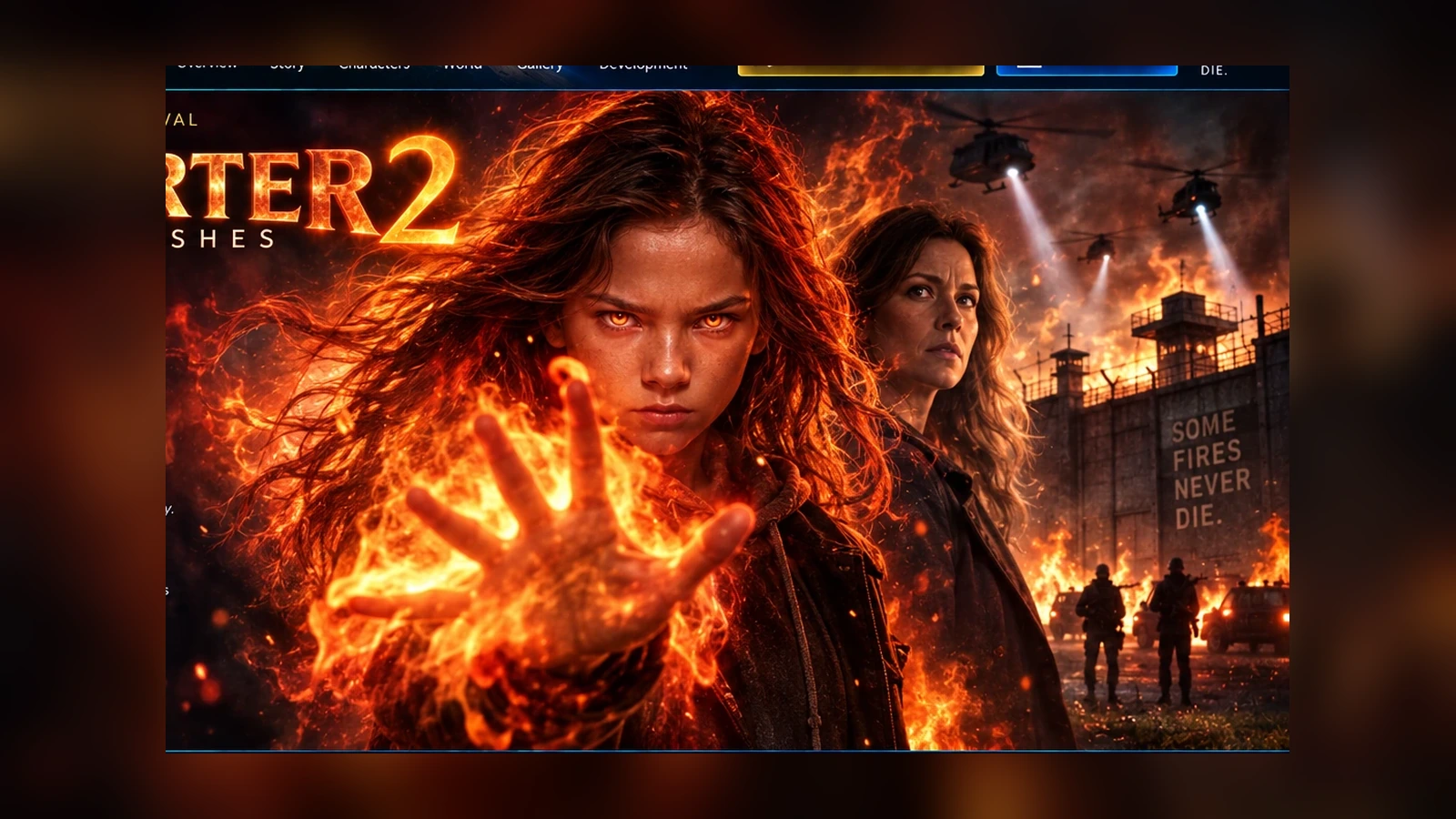
Charlie McGee survived being treated as a weapon. Now, as Emma and Lucas begin manifesting abilities of their own, she must keep her family alive without turning protection into another form of control.
Family at the Center
Charlie McGee is now in her early forties and raising Emma, fourteen, and Lucas, ten. The abilities that once isolated Charlie have become a family inheritance, turning protection, trust, and parenting into the core dramatic problem.
The New Generation
Emma begins hearing other people’s thoughts while Lucas manifests heat through casual contact. Their different ages and temperaments create two distinct experiences of inherited power rather than a simple repetition of Charlie’s childhood.
The Pursuit
Surveillance, drones, vehicles, agents, and a secret organization close in. Director Adrian Hawthorne represents the institutional belief that extraordinary children can still be classified, contained, and weaponized.
Source-Grounded Overview
Inferno’s Edge begins from a deliberately different point in Charlie McGee’s life. She is no longer a child discovering that adults want to turn her into a weapon; she is an adult survivor trying to keep that same machinery away from her own children. Domestic calm is therefore never truly calm. Charlie watches the property for danger, measures what her children reveal, and knows from experience how quickly fear can become custody, experimentation, and institutional ownership.
Emma and Lucas force Charlie to confront a problem she cannot solve simply by hiding. Emma’s emerging telepathic ability makes secrecy increasingly difficult, while Lucas’s heat manifestations reveal how casually power can enter ordinary family life. The screenplay expands from that household pressure into pursuit. Harlan becomes a practical ally who can provide shelter and conventional protection. Riley later joins the group with inside knowledge of the organization pursuing them. Together they turn survival into a coordinated effort to dismantle the control network rather than merely outrun it.
The richest adaptation lane is generational. Charlie knows exactly what coercion, experimentation, and fear can do to a child, but that knowledge can itself become overprotection. The novel can therefore explore the difference between protecting Emma and Lucas and controlling them, while giving each child a distinct relationship to power, danger, and inherited trauma.
By the later screenplay, Charlie, Emma, and Lucas are using their abilities together as Riley attacks the organization’s systems and Harlan provides conventional defense. The existing source, however, is not structurally complete: after a disabled control room the group leaves for a stated “final confrontation,” but that confrontation is not present in the supplied PDF. That missing climax remains a controlled development issue rather than something the public website invents.
Human Architecture
Family remains more important than spectacle. The public treatment keeps parenting, fear, trust, institutional power, surveillance, and the children’s right to define themselves visible alongside the paranormal action.
Rights boundary: Independent speculative continuation of pre-existing third-party IP. Aurora Design Studios claims no ownership, affiliation, endorsement, or authorization. Commercial book, film, television, or derivative use requires permission from the applicable rights holder. Rights-holder identity is not asserted on this page unless separately verified.