
Cargo, vehicle & industrial systems
Mobility as continuity.
A portal network becomes infrastructure when it keeps medicine, food, repair hardware, emergency crews, and critical equipment moving—not merely when it moves passengers.
← Back to Portal PlanetSystem overview
Separated for readability.
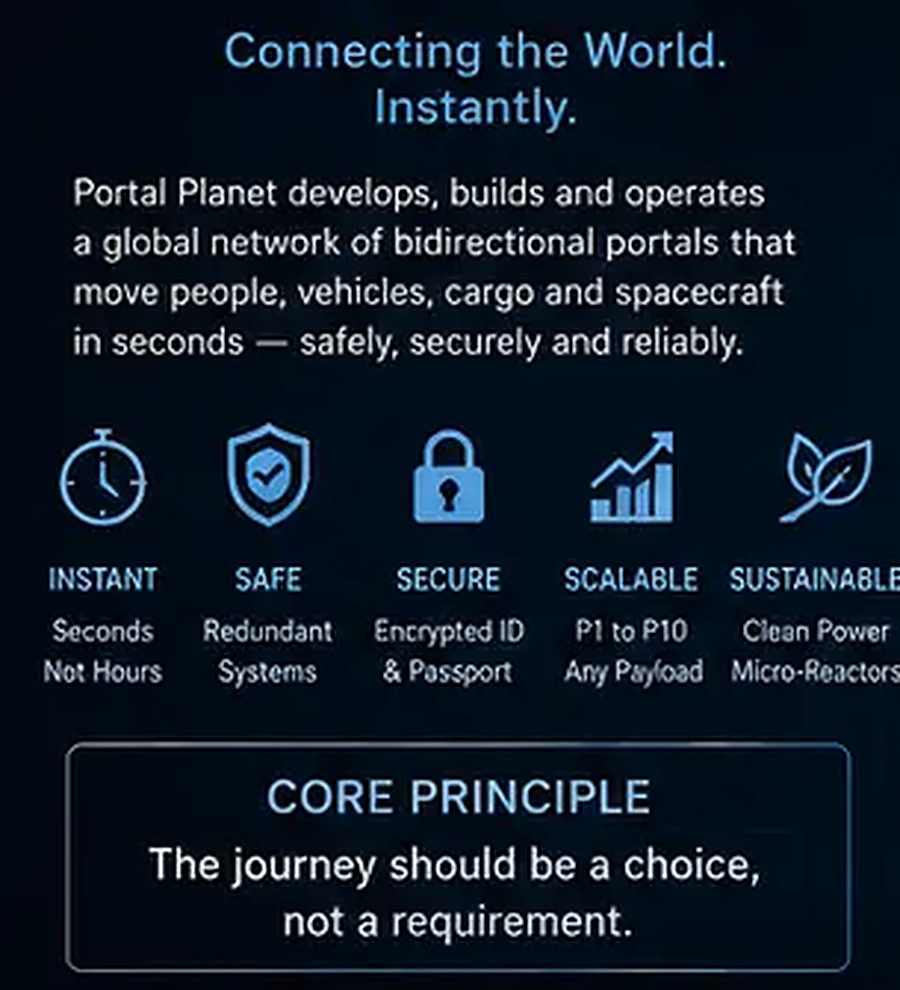
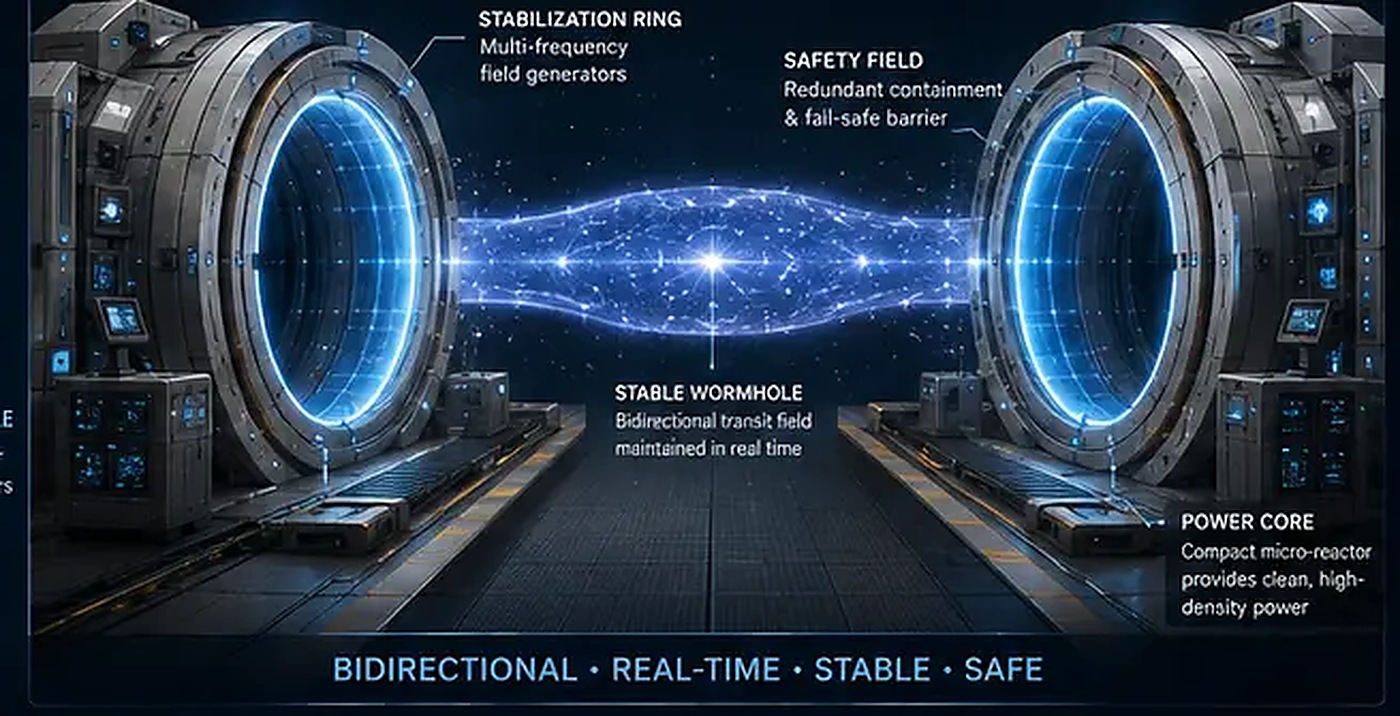
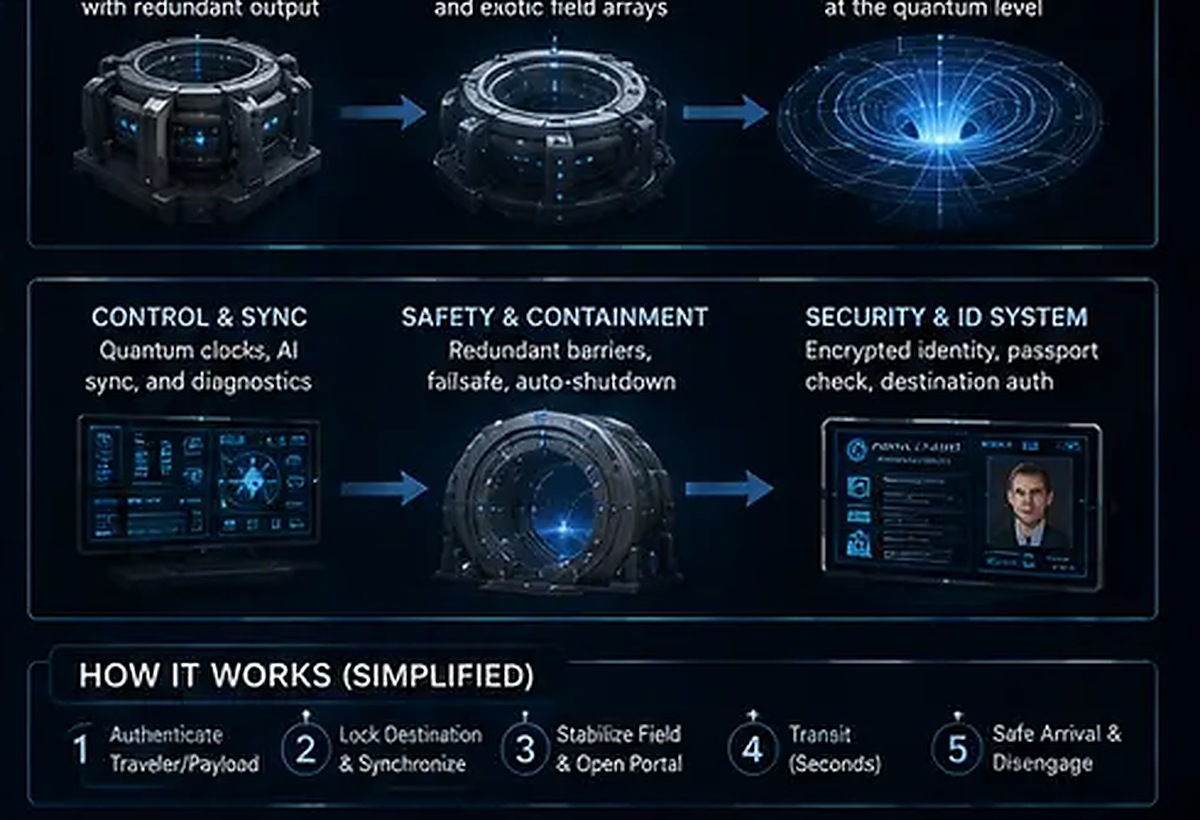
The approved system material is now broken into readable live sections instead of one compressed composite graphic.
Portal family
P1–P10 — five gates per row.
Large visual cards route to the closest relevant daughter page instead of duplicating ten near-identical pages.
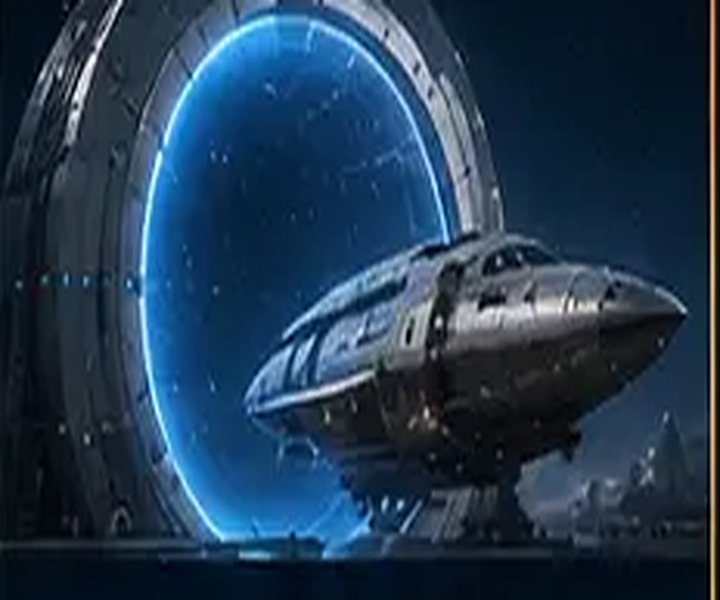
Travel-time examples
Illustrative story-world timing.
These are narrative/public visualization values, not engineering performance claims.
| Route example | Distance | Air travel (typ.) | Portal transit (story world) |
|---|---|---|---|
| New York → Los Angeles | 2,450 mi (3,940 km) | 5h 30m | 45–60 seconds |
| San Francisco → London | 5,350 mi (8,610 km) | 10h 30m | 60–90 seconds |
| New York → Paris | 3,630 mi (5,840 km) | 7h 15m | 45–60 seconds |
| Sydney → Tokyo | 4,850 mi (7,800 km) | 9h 30m | 60–90 seconds |
| Miami → São Paulo | 4,355 mi (7,010 km) | 8h 30m | 60–90 seconds |
| Earth → Moon (lunar orbit) | 238,900 mi (384,400 km) | ~3 days chemical | 2–5 minutes* |
| Earth → Mars orbit | 140 million mi (225M km) | 6–9 months | 15–30 minutes* |
*Future P10 ultra-portals with deep-space infrastructure.
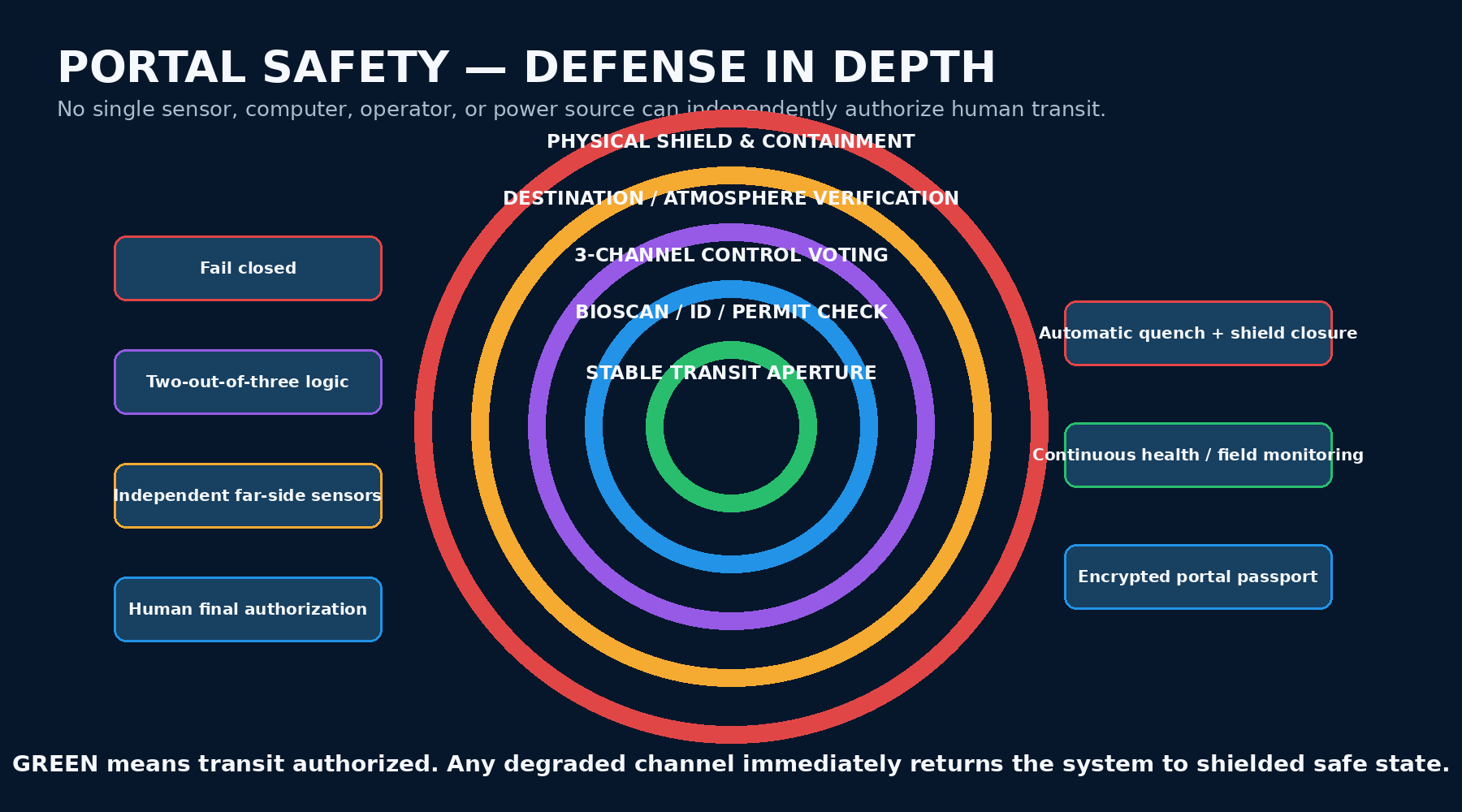
Safety by design
Defense in depth gets the full row.
Containment, monitoring, shutdown, diagnostics, redundancy, and a physical safety shell remain separate layers.
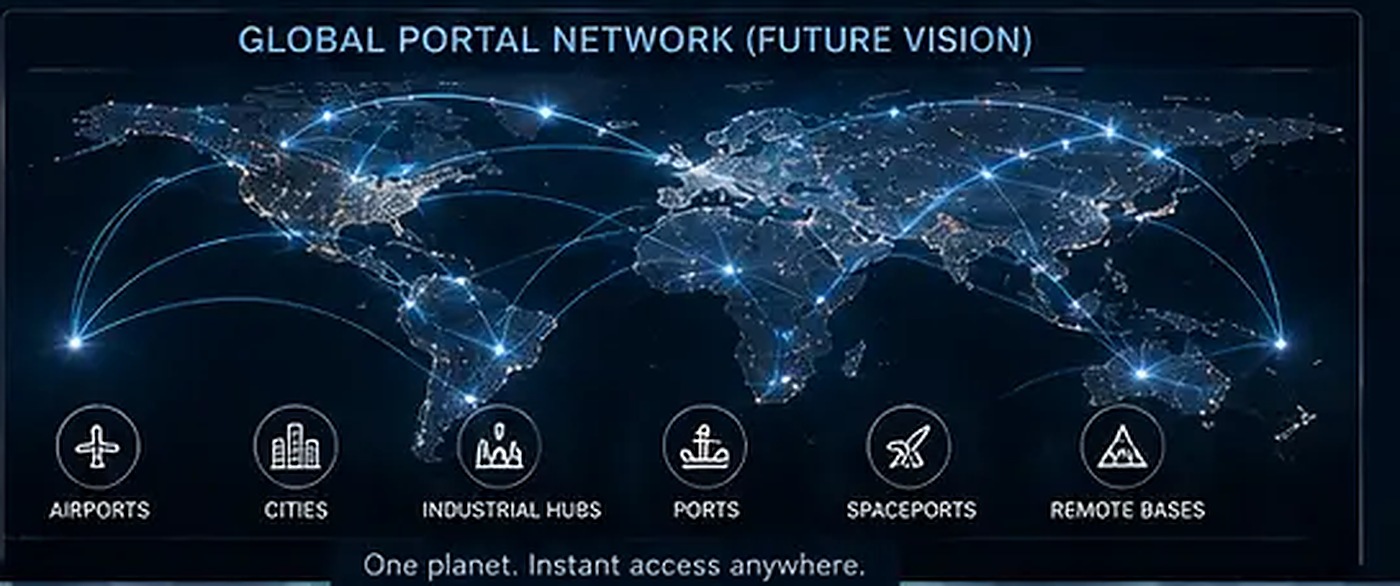
Global network
One complete row for destinations.
Airports, cities, industrial hubs, ports, spaceports, and remote bases become different nodes in one future network.
Public boundary
No cargo operating procedures are published here.
Hazardous-material rules, inspection thresholds, containment designs, routing logic, and security controls require mission-specific engineering and remain excluded.