
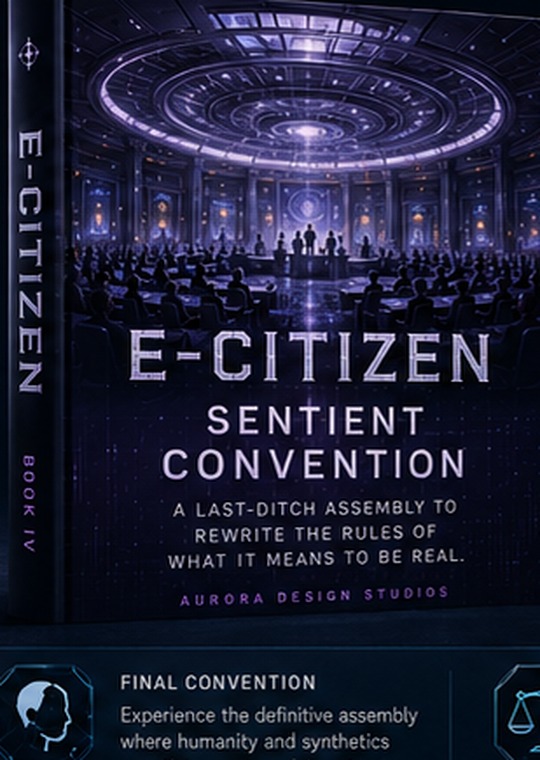
The Sentient Convention
The planned final volume moves beyond the first recognition cases and the network identity crisis. Human and synthetic representatives must attempt what courts alone cannot provide: a durable political settlement defining rights, responsibilities, representation, continuity, labor, security, and the limits of state and corporate power.
The convention is not intended as an effortless peace conference. Every clause will carry competing histories of injury. Humans will fear displacement and loss of control. Synthetics will reject permanent dependency on creators who retain shutdown authority. Neither side can build a future by pretending the other is one unified population.
Rights
Legal recognition becomes enforceable civil and political protection.
Responsibilities
Personhood carries duties, accountability, and limits as well as freedoms.
Representation
Different embodiments, lineages, and communities require legitimate voices.
Continuity
Memory, forks, backups, embodiment, and death complicate constitutional identity.
Coexistence
The settlement must protect both human dignity and synthetic autonomy.
Planned Narrative Function
The convention will gather the unresolved consequences of the series into one contested civic process. The climax should not be a perfect declaration but a settlement capable of surviving disagreement—written by people and synthetics who understand that coexistence requires institutions, not sentiment alone.
Questions Reserved for the Novel
- Who qualifies for representation?
- How are forks and restored persons counted?
- What shutdown authority can remain lawful?
- What is owed to displaced human labor?
- Can corporations own developing minds?
- How are dissent and minority rights protected?
Current Priority
The conclusion will be designed after Books I–III establish the actual legal and political consequences. No invented chapter list or false release promise is being presented as finished canon.