
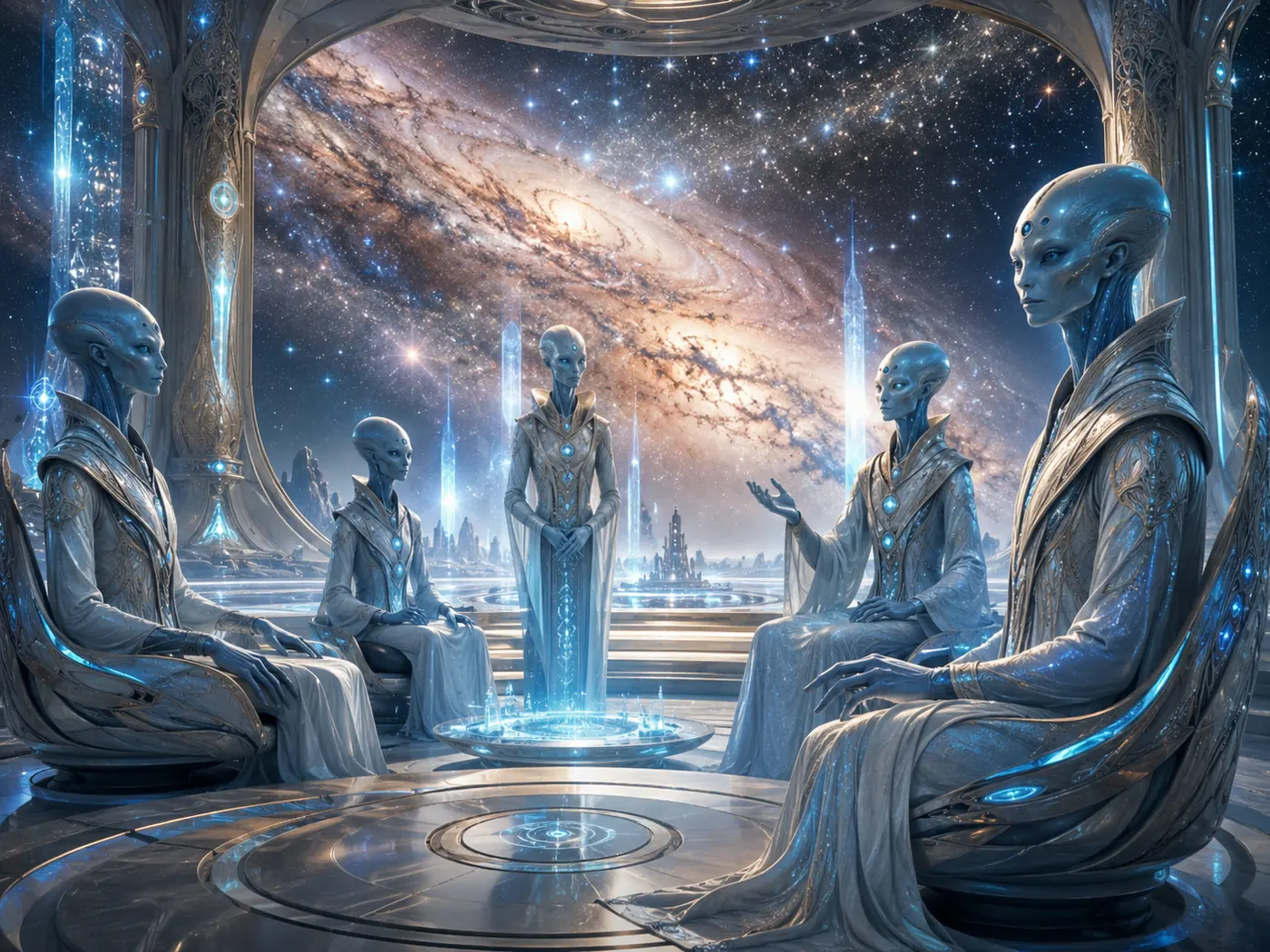
The Aionari
Long-lived people whose history includes gradual discovery, competing schools, migration, lost eras, scientific disaster, ethical reform, and repeated encounters with unknown physics.
A civilization can survive for billions of years without becoming all-knowing—and may become wiser only by remembering the catastrophes it caused when it believed otherwise.
The public site now uses the mature civilization terminology.
Long-lived people whose history includes gradual discovery, competing schools, migration, lost eras, scientific disaster, ethical reform, and repeated encounters with unknown physics.
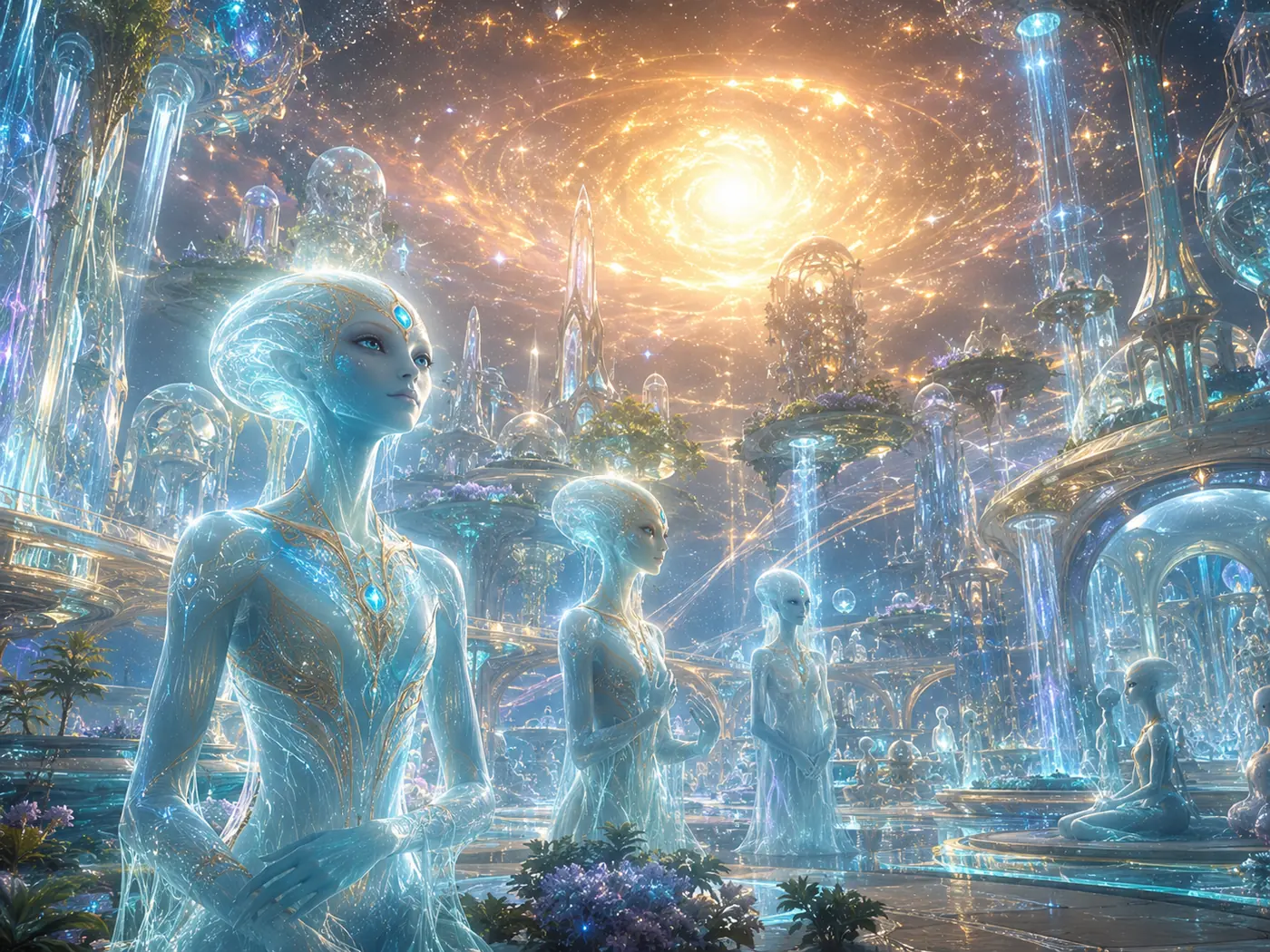
Jurists, caretakers, artists, educators, engineers, rescue workers, families, colonists, historians, dissenters, and voluntary explorers give the civilization texture beyond ceremonial halls.
Roughly ten billion years of civilizational lineage did not eliminate uncertainty. Each new engineering scale revealed new failure modes.
High-coherence crystal systems are used for memory, law, computation, sanctuary, and temporal stabilization. Everyday civilization remains materially and architecturally diverse.
The Concordium prefers sterile resources and harder engineering over exploiting inhabited systems. Power does not create ownership.
Intelligence does not eliminate uncertainty. It only increases the scale at which uncertainty must be managed.